Organizational development processes are the structured steps growing companies use to strengthen leadership, improve workflows, and prepare their teams for the next stage of growth. Whether you’re scaling from twenty employees to a hundred, or rebuilding after a hiring surge, these processes give leaders a clear playbook instead of guesswork. However, many small and mid-sized business owners feel unsure where to start. This guide breaks down what organizational development processes actually involve, why they matter, and how to put them into action.
Quick Answer: Organizational development processes are ongoing, planned activities—like leadership development, workflow redesign, and culture initiatives—that help a company build capacity and adapt to growth. Unlike one-off HR fixes, they’re systematic, data-informed, and tied directly to long-term business goals.
What Are Organizational Development Processes?
Organizational development processes are structured, ongoing efforts to improve how a company functions through planned change in people, systems, and culture. In particular, they rely on assessment, strategy, and measurement rather than quick patches. As a result, the changes tend to last.
In practice, this might mean restructuring reporting lines, redesigning onboarding, or building a leadership pipeline so key roles never sit empty for long. For a deeper look at how these efforts fit together, Soteria HR’s organizational development consulting services walk through the full scope of support available to growing teams.
Why an Organizational Development Strategy Matters for Growing SMBs
A solid organizational development strategy matters because growth without structure creates friction. Specifically, roles overlap, decisions stall, and turnover creeps up when nobody owns the plan for how the company should evolve.
Consider a Gallup workplace study, which found that companies with highly engaged teams—often the product of intentional development efforts—see up to 21% higher profitability than those with low engagement (Gallup, State of the Global Workplace). Therefore, treating development as optional can cost real money, not just morale.
For a full walkthrough of how strategy connects to results, see Soteria HR’s strategic organizational development growth guide.

Mapping out organizational development processes helps leadership teams turn strategy into action.
Core Elements of a Strong Organization Development Framework
An effective organization development framework typically includes five interlocking pieces: leadership development, workflow design, performance management, culture initiatives, and change communication. Each piece supports the others, so skipping one often weakens the rest.
For example, a new performance review system rarely sticks if managers haven’t received leadership coaching first. Similarly, culture work falls flat without clear communication about why changes are happening. Soteria HR’s organization development framework guide breaks each of these elements down in more detail.
How This Differs From a Custom HR Playbook
A custom HR playbook usually documents policies and procedures. An organization development framework, in contrast, is the bigger-picture strategy that decides which policies and procedures actually need to exist in the first place.
How to Implement Organizational Development Processes in 6 Steps
Implementation works best as a sequence rather than a single event. Below is a practical order that most growing companies can follow, regardless of industry.
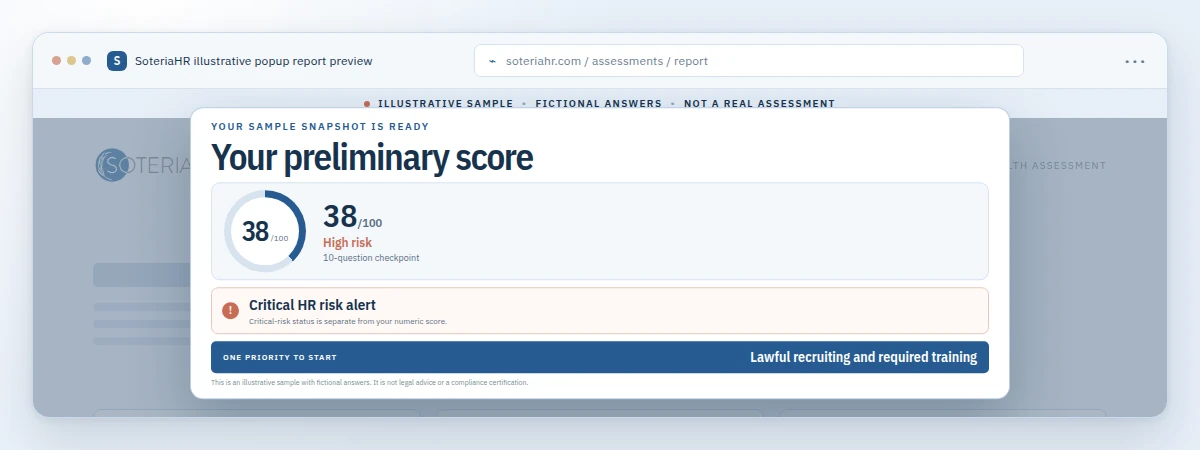
- Conduct an HR health assessment. Evaluate current structure, culture, workflows, and compliance gaps before making any changes so decisions rest on real data instead of assumptions.
- Define clear, measurable goals. Tie objectives directly to business strategy, such as reducing turnover by a target percentage within a set timeframe.
- Design the framework. Build a tailored playbook covering leadership development, workflow updates, and communication plans suited to your company’s size and culture.
- Communicate the change to employees. Share the purpose and timeline early, using multiple channels, to reduce confusion and build trust during the transition.
- Implement training and structural updates. Roll out changes gradually, pairing new structures with coaching so employees have the skills needed to succeed.
- Measure results and adjust. Track engagement, retention, and productivity regularly, then refine the framework based on what the data actually shows.
Notably, this sequence mirrors the approach outlined in Soteria HR’s complete guide to organizational development strategy, which expands on each step with real-world examples.
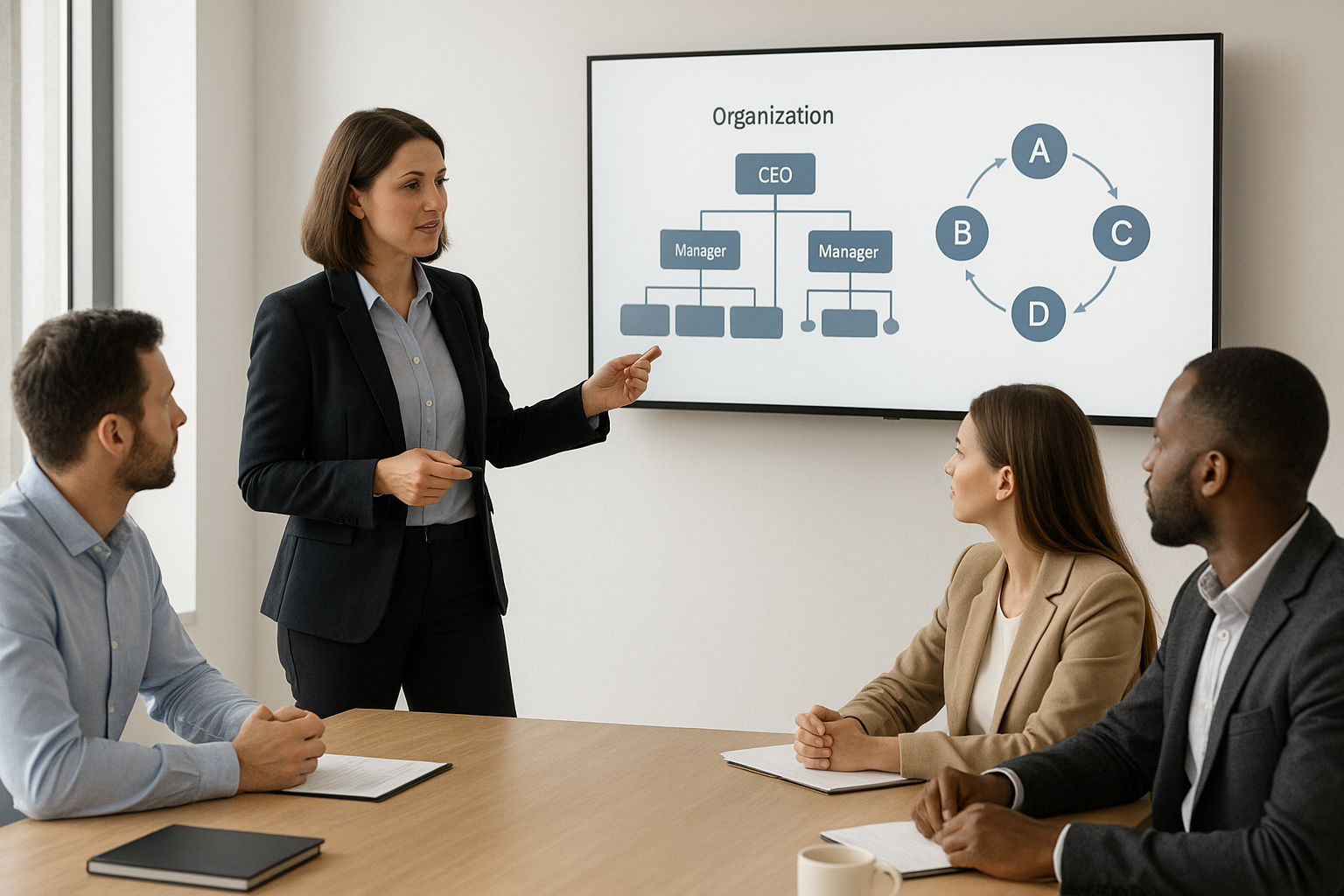
Presenting the organization development framework helps leadership teams align before rollout begins.
Common Challenges When Building an Organizational Development Strategy
Even well-intentioned leaders run into predictable obstacles. Above all, three challenges show up again and again in growing organizations.
Lack of Dedicated HR Leadership
Many SMBs assign development work to an office manager who is already stretched thin. Consequently, the initiative stalls before it gains traction.
Inconsistent Communication
When employees hear about changes secondhand, trust erodes quickly. In contrast, companies that over-communicate tend to see faster buy-in.
Treating OD as a One-Time Project
According to the Society for Human Resource Management, sustainable change requires continuous reinforcement, not a single kickoff meeting (SHRM). Therefore, quarterly reviews matter more than a flashy launch. For more guidance on avoiding these pitfalls, see the practical organization development strategy guide from Soteria HR.
How Soteria HR Supports Organizational Development Processes
Soteria HR partners with growth-minded small and mid-sized businesses—typically 10 to 250 employees—that need professional HR support without building a full in-house department. Specifically, our team provides HR health assessments, custom HR playbooks, compliance management, and hands-on organizational development consulting tailored to each client’s stage of growth.
Rather than delivering generic templates, we act as an embedded partner who understands your business and helps you get ahead of problems before they cost you time or talent. If you’re ready to build a stronger foundation, you can talk to an HR expert at Soteria HR about your next steps.

Successful organizational development processes show up in stronger teamwork and morale.
Frequently Asked Questions About Organizational Development Processes
What are organizational development processes?
Organizational development processes are planned, ongoing activities—such as leadership development, workflow redesign, and culture initiatives—that improve how a company functions. They rely on assessment and measurement rather than one-time fixes.
How do organizational development processes differ from HR administration?
HR administration handles daily tasks like payroll and benefits, while organizational development focuses on long-term structural and cultural improvement. Both work together, but OD is strategic rather than transactional.
Why do growing businesses need organizational development processes?
Growing businesses need these processes to avoid the chaos that often comes with rapid hiring or new leadership layers. Structured OD helps leaders scale without losing culture or efficiency.
How long does it take to implement an organization development framework?
Most small and mid-sized businesses see initial results within three to six months, though full cultural shifts can take a year or longer. Timelines depend on company size and leadership buy-in.
How much does organizational development consulting cost for SMBs?
Costs vary based on scope, but outsourced consulting is typically far less expensive than hiring a full internal team. Many providers offer scalable packages tied to company size and needs.
What are the most common mistakes companies make with organizational development processes?
Common mistakes include skipping the assessment phase, failing to communicate changes clearly, and treating OD as a one-time project instead of an ongoing practice.
What is the difference between organizational development and organizational design?
Organizational design focuses on structure—reporting lines, roles, and teams—while organizational development is broader, addressing culture, capability, and change management. Design is one component within a larger OD strategy.
How do you measure the success of organizational development processes?
Success is measured through metrics like employee retention, engagement scores, productivity, and time-to-fill for open roles. Comparing these figures before and after implementation shows real impact.
What role does leadership play in organizational development strategy?
Leadership is essential because change adoption depends on visible commitment from the top. Without leaders modeling new behaviors, even well-designed OD strategies tend to lose momentum.
Can small businesses with under 50 employees benefit from organizational development processes?
Yes, smaller businesses often benefit the most because early structure prevents costly growing pains later. Even lightweight OD practices, like clear role definitions, pay off as headcount increases.
What are best practices for building an organization development framework?
Best practices include starting with an honest assessment, involving employees in the process, setting measurable goals, and reviewing progress quarterly. Consistency matters more than speed.
How often should organizational development processes be reviewed?
Most experts recommend reviewing OD initiatives at least twice a year, with a deeper audit annually. Fast-growing companies may need quarterly check-ins to stay aligned with changing needs.
Final Thoughts
Ultimately, organizational development processes give growing companies a repeatable way to build stronger teams, smoother workflows, and cultures that hold up under pressure. Rather than reacting to problems as they surface, businesses that invest in structured OD tend to prevent them in the first place. As outlined throughout this guide, the process starts with an honest assessment, moves through clear goal-setting and framework design, and continues with regular measurement and adjustment. For further reading, the Wikipedia entry on organization development offers useful background on the discipline’s roots. If your team is ready for hands-on support building or refining these processes, Soteria HR is glad to help you get started with a plan built around your goals.