
Employee outsourcing companies are organizations that take over one or more HR functions — such as payroll, benefits administration, and compliance — on behalf of a client business. According to the National Association of Professional Employer Organizations (NAPEO), businesses that use PEOs grow 7 to 9 percent faster and have 10 to 14 percent lower employee turnover than those that do not. In short, choosing the right partner can directly shape your company’s growth.
What Are Employee Outsourcing Companies?
Employee outsourcing companies are third-party firms that assume responsibility for managing workforce-related tasks that would otherwise fall to an internal HR department. These tasks typically include payroll processing, tax filings, employee benefits, onboarding, and regulatory compliance. However, the client business retains full day-to-day management of its team.
There are several models to understand. A Professional Employer Organization (PEO) — meaning a firm that co-employs your workers for administrative purposes — is the most common structure. An Employer of Record (EOR), on the other hand, becomes the legal employer, which is especially useful for hiring internationally. Staffing agencies are a third category, focused primarily on recruiting and placing temporary workers rather than managing ongoing HR operations.

Understanding which model fits your business is the first step toward selecting the right outsourcing partner.
Why Businesses Turn to HR Outsourcing
For many small and mid-sized businesses, managing HR in-house is neither efficient nor cost-effective. Consequently, outsourcing has become a mainstream strategy rather than a last resort. The administrative burden of staying compliant with ever-changing employment laws alone can consume dozens of hours per month.
Furthermore, outsourced HR providers pool employees across multiple client companies. As a result, they can negotiate better rates on health insurance and retirement benefits than a small business could secure independently. This gives your team access to enterprise-level perks without the enterprise-level price tag.
Beyond cost, there is a significant risk-reduction benefit. Employment law violations can result in steep fines. A dedicated HR outsourcing partner stays current on federal, state, and local regulations, reducing your exposure considerably. For a deeper look at the specific advantages, explore why outsourcing HR functions makes strategic sense for growing businesses.
How to Choose the Right Employee Outsourcing Partner
Selecting among the many employee outsourcing companies available requires a structured approach. Follow these six steps to make a confident, well-informed decision.
- Audit your current HR needs. List every HR task your team handles and flag which ones are most time-consuming or legally risky. This gives you a clear baseline for what you need outsourced.
- Define your budget and service scope. Decide whether you need a full-service arrangement or targeted support — for example, payroll only. Knowing your ceiling helps you filter providers quickly.
- Research and shortlist providers. Look for accredited firms and read independent reviews. Aim for a shortlist of three to five candidates that have experience in your industry and with companies your size.
- Request proposals and compare pricing. Ask each provider for a detailed proposal. Compare service levels, technology platforms, compliance guarantees, and transition support — not just the monthly fee.
- Check references and verify credentials. Confirm ESAC accreditation or IRS Certified PEO status. Contact current clients and review the provider’s data security policies before committing.
- Sign the contract and begin onboarding. Review the service agreement with legal counsel. Set a clear transition timeline and work with the provider’s implementation team to migrate your HR data securely.

A thorough review process protects your business before you commit to any long-term HR outsourcing agreement.
Key Credentials to Look For
Not every workforce outsourcing provider meets the same standard. Therefore, credentials matter. The two most important marks of credibility are:
- ESAC Accreditation — Issued by the Employer Services Assurance Corporation, this confirms financial stability and ethical business practices.
- IRS Certified PEO (CPEO) Status — This federal designation confirms that the PEO meets strict tax compliance and financial reporting standards.
Additionally, look for providers who offer a dedicated account manager rather than a generic support queue. Personalized service makes a significant difference when you have urgent compliance questions or payroll issues.
What Services Should a Workforce Outsourcing Provider Cover?
A comprehensive HR outsourcing solution should address more than just payroll. Specifically, look for providers that cover the following core areas:
- Payroll processing and tax filings
- Employee benefits administration (health, dental, vision, 401k)
- Workers’ compensation management
- New employee onboarding and offboarding
- Federal, state, and local compliance monitoring
- Employee handbook creation and policy updates
- Performance management support
Some providers also offer recruiting support and training programs. However, these are typically add-on services. Clarify upfront which features are included in the base package and which carry additional fees. You can review a full breakdown of available services at Soteria HR’s services page.
Understanding Pricing Models
Pricing among employee outsourcing companies typically follows one of two structures. The first is a percentage of total payroll — usually between 2% and 12%. The second is a flat per-employee monthly fee, which commonly ranges from $40 to $160 per employee.
For smaller teams, a flat fee is often more predictable and budget-friendly. For larger payrolls, the percentage model may actually cost less overall. In either case, request an itemized quote so you understand exactly what each dollar covers.
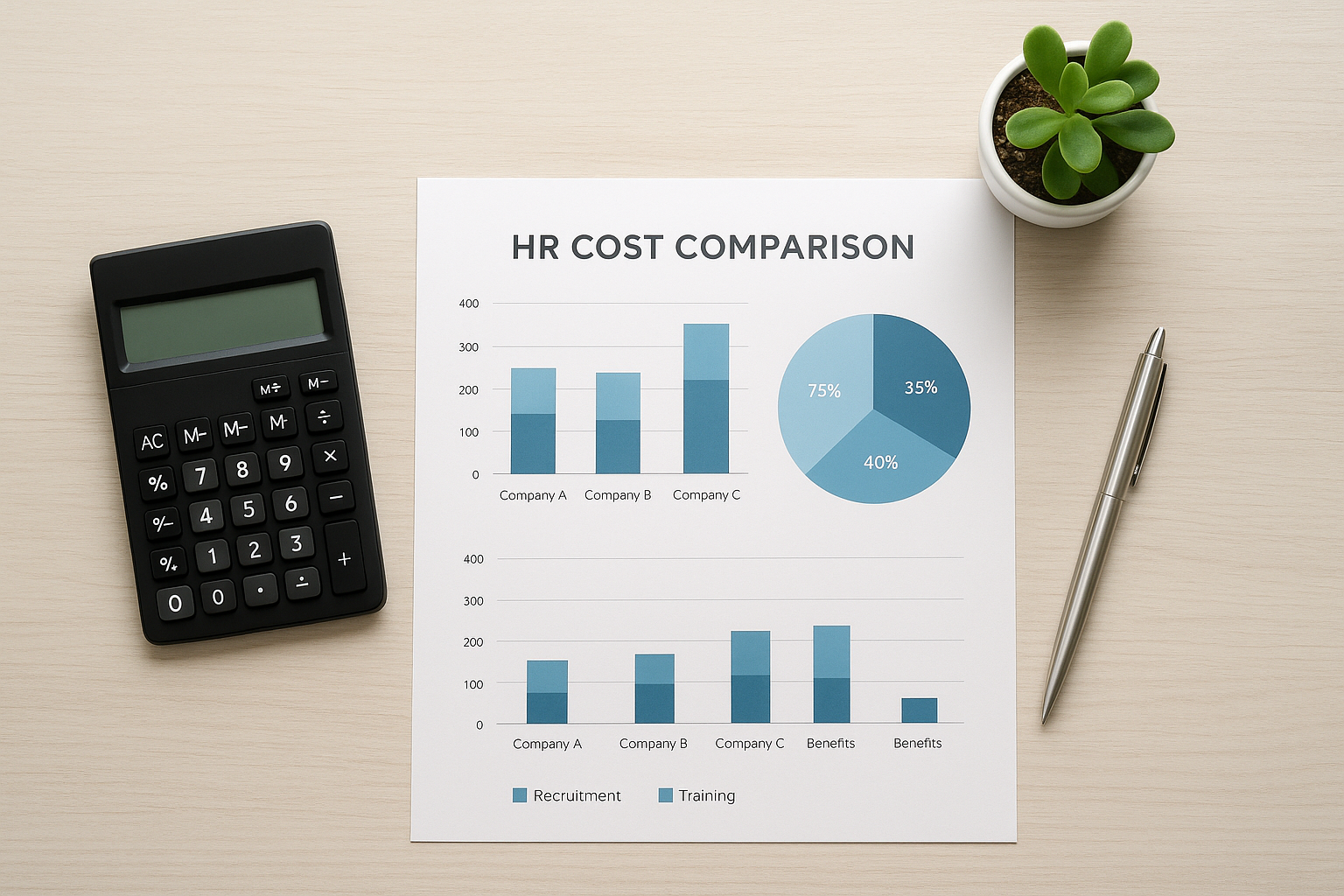
Comparing pricing models carefully helps you avoid unexpected costs when partnering with an outsourced HR provider. For a deeper walkthrough, see our Cost of HR Outsourcing: Pricing Models, Ranges & Savings.
Common Mistakes to Avoid When Outsourcing HR
Even well-intentioned businesses make avoidable errors when selecting an outsourcing partner. Here are the most common pitfalls and how to sidestep them. For a deeper walkthrough, see our How to Find Reliable HR Outsourcing Partners: A Complete Guide.
Choosing on price alone. The cheapest provider is rarely the best fit. A low price often means limited support, outdated technology, or hidden fees that surface later. Instead, evaluate total value — including service quality and compliance track record.
Skipping the contract review. Service agreements can contain auto-renewal clauses, termination penalties, and ambiguous data ownership terms. Therefore, always have a legal professional review the contract before signing.
Overlooking data security. Your HR provider will handle sensitive employee data. Consequently, confirm that they use encrypted data storage, conduct regular security audits, and comply with relevant data protection regulations.
Failing to communicate the change to employees. A transition to outsourced HR affects your team directly. Above all, communicate the change clearly — explain what is changing, who employees should contact, and how their benefits or payroll will be handled during the transition.
Frequently Asked Questions About Employee Outsourcing Companies
What are employee outsourcing companies?
Employee outsourcing companies are firms that manage HR functions — such as payroll, benefits, and compliance — on behalf of another business. They allow companies to focus on core operations while professionals handle workforce administration.
How do employee outsourcing companies differ from staffing agencies?
Staffing agencies primarily recruit and place temporary workers, while employee outsourcing companies take on ongoing HR responsibilities like payroll processing, benefits administration, and legal compliance for your existing workforce.
What is a Professional Employer Organization (PEO)?
A PEO, or Professional Employer Organization, is a type of employee outsourcing company that enters a co-employment arrangement with your business. The PEO becomes the employer of record for tax and benefits purposes while you retain day-to-day management of your staff.
How much do employee outsourcing companies typically cost?
Most PEOs charge between 2% and 12% of total payroll, or a flat per-employee monthly fee ranging from $40 to $160. However, savings on HR staff salaries and compliance penalties often offset this investment significantly.
What HR functions can be outsourced?
Businesses can outsource payroll processing, benefits administration, employee onboarding, compliance management, workers’ compensation, performance management, and recruiting. The scope depends on the provider and the package selected.
Is HR outsourcing suitable for small businesses?
Yes, HR outsourcing is especially valuable for small businesses that lack dedicated HR staff. It gives smaller companies access to enterprise-level HR expertise and benefits packages without the overhead of a full in-house department.
What are the main benefits of using an employee outsourcing company?
Key benefits include reduced administrative burden, lower compliance risk, access to better employee benefits, cost savings on HR staffing, and more time for leadership to focus on business growth.
What risks should I watch for when choosing an outsourcing partner?
Common risks include lack of transparency in pricing, poor data security practices, limited service customization, and slow response times. Always review contracts carefully and check references before signing.
How long does it take to transition to an outsourced HR model?
The transition timeline typically ranges from two to eight weeks, depending on company size and the complexity of existing HR systems. A reputable provider will assign a dedicated implementation team to minimize disruption.
What is an employer of record (EOR)?
An employer of record (EOR) is a third-party company that legally employs workers on behalf of a client business. This is especially useful for hiring international employees or contractors without setting up a legal entity in another country.
Can I outsource HR while keeping control of my team?
Absolutely. Employee outsourcing companies handle administrative and compliance tasks, but you retain full control over day-to-day management, hiring decisions, and company culture. The arrangement is designed to support, not replace, your leadership.
How do I evaluate whether an outsourcing company is reputable?
Look for accreditation from the Employer Services Assurance Corporation (ESAC) or IRS Certified PEO status. Check client reviews, ask for references, and confirm they carry adequate liability insurance and maintain transparent pricing.
Conclusion: Making the Right Choice Among HR Outsourcing Providers
Choosing among employee outsourcing companies is one of the most impactful operational decisions a growing business can make. The right partner reduces your administrative burden, strengthens compliance, and gives your employees access to better benefits — all while freeing your leadership team to focus on what matters most. Therefore, take the time to audit your needs, compare credentials, and ask the right questions before committing. For expert guidance tailored to your business, Soteria HR offers scalable outsourcing solutions designed to grow alongside your organization.