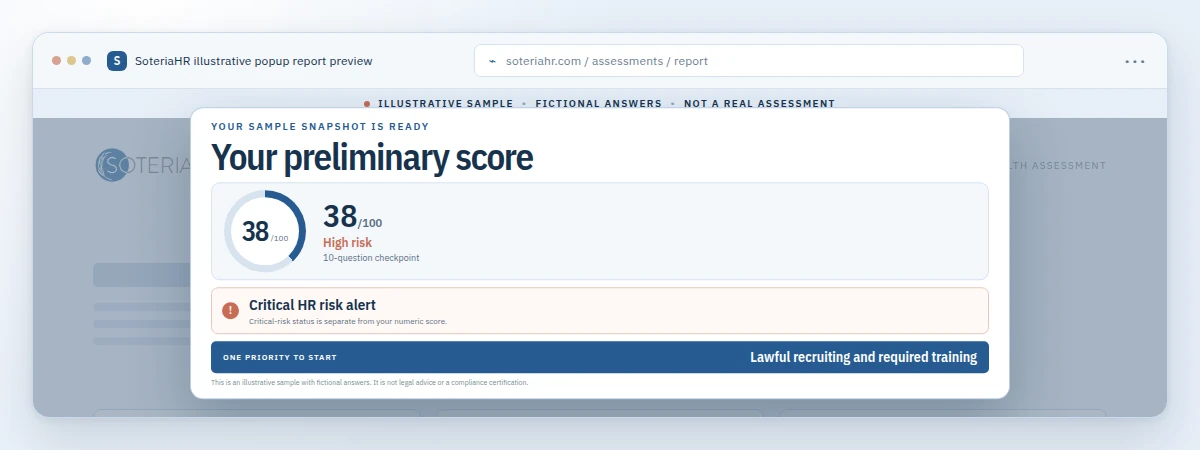
Professional development is one of the highest-leverage investments a growing organization can make — and yet it’s the one most small businesses keep pushing to next quarter. If your team isn’t growing, your business isn’t either. That’s not a platitude; it’s a pattern we see every single week with the companies we work with.
According to LinkedIn’s 2023 Workplace Learning Report, 93% of employees say they would stay longer at a company that invests in their career development. That’s not a small number. That’s nearly everyone on your team telling you exactly what they need to stick around.
In this guide, we’ll break down what professional development actually means in practice, why it matters for companies with 10 to 250 employees, exactly how much it costs, an 8-step framework for building a program from scratch, and how to measure whether it’s actually working — all without requiring a dedicated L&D budget or a full HR department.
What Is Professional Development, Really?
Professional development is the ongoing process of building skills, knowledge, and competencies that help employees grow in their current roles and advance in their careers. It includes formal training, mentoring, coaching, stretch assignments, tuition support, and self-directed learning.
However, supporting it goes a step further. It means creating the conditions — the time, the budget, the culture, and the structure — that allow learning to actually happen. Many organizations buy a few online courses and call it development. That’s not enough, and employees can tell the difference.
For a deeper look at building structured programs, the Society for Human Resource Management (SHRM) offers extensive frameworks for employee development at every company stage. In addition, the U.S. Department of Labor’s Employment and Training Administration publishes workforce development data that’s worth reviewing if you want to benchmark against national trends.
Training vs. Development: Where the Line Actually Falls
People use these two terms interchangeably, but they aren’t the same thing. Training is narrow and immediate — it teaches someone how to use a specific tool or follow a specific process. Development, in contrast, is broader and longer-term. It’s about building a career, not just completing a task.
Specifically, a new hire learning your onboarding software is training. A mid-level manager being coached toward a director role is development. Above all, the strongest programs treat both as connected parts of the same system rather than competing budget lines.

Building a culture that supports professional development starts with structured, collaborative planning sessions.
Why Investing in Employee Growth Pays Off for Growing Businesses
Small and mid-sized businesses often treat development as a “nice to have.” In reality, it’s a retention and performance strategy. Replacing a single employee costs, on average, 50% to 200% of their annual salary, according to Gallup research. Development programs reduce that risk significantly.
Furthermore, employees who grow within your organization become institutional knowledge holders. They understand your culture, your clients, and your processes. Losing them isn’t just expensive — it’s disruptive in ways that don’t show up neatly on a spreadsheet.
For growing companies specifically, development also builds the internal bench strength needed to promote from within — which is almost always faster, cheaper, and safer than hiring externally for leadership roles.
The Growth-Retention Connection
Engagement and development are tightly linked. Employees who feel stuck are disengaged. Disengaged employees are less productive, more likely to call in sick, and more likely to leave. Therefore, investing in growth isn’t just a feel-good gesture — it directly affects your bottom line.
In contrast, teams that feel supported in their growth tend to take more initiative, collaborate more effectively, and bring better ideas to the table. That’s the compounding return on a development culture — and it’s one most competitors overlook entirely when they talk about this topic in purely tactical terms.
The Engagement Multiplier Effect
Development doesn’t just help the individual employee — it ripples outward. Specifically, a well-mentored employee often becomes a future mentor themselves, a trained manager coaches better, and a confident team member speaks up in meetings more often. Above all, this multiplier effect is why companies with mature development cultures tend to outperform peers on nearly every engagement survey metric available.
How to Build a Professional Development Program: An 8-Step Framework
Building a development program doesn’t have to be complicated. Specifically, the following eight steps give you a practical, start-to-finish framework that works for organizations of any size — whether you’re starting from zero or formalizing something informal.
- Assess current skills and gaps. Survey your team and review performance data to identify where skill gaps exist today and where they’re likely to emerge as you grow. This is your foundation, and skipping it leads to generic programs nobody actually needs.
- Align development goals with business priorities. Map each skill gap to a specific business need. Every development investment should have a measurable purpose tied to your growth objectives rather than a vague sense of “being supportive.”
- Set a realistic budget per employee. Decide how much you can invest per person per year, and build flexibility in so high performers and critical roles can receive additional support when it matters most.
- Build individual development plans. Create written plans for each employee with specific learning goals, recommended resources, timelines, and success metrics. Our guide on how to develop employees walks through this in detail, and our resource on creating employee development plans provides ready-to-use templates.
- Choose the right learning methods. Mix formal training, on-the-job learning, mentoring, and peer coaching. A blended approach consistently outperforms single-method programs, and it costs less than people assume.
- Assign an owner for the program. Someone — a manager, an HR lead, or an outsourced partner — needs to be accountable for keeping the program moving. Without an owner, even great plans quietly stall out by the second quarter.
- Build in regular check-ins and accountability. Schedule quarterly development conversations. Annual reviews alone aren’t enough to keep employees progressing and engaged throughout the year.
- Measure impact and adjust. Track retention rates, performance scores, internal promotions, and employee satisfaction to evaluate whether your program is actually working, then refine it annually.
For more on building structured learning pathways, explore Soteria HR’s resources on employee training programs and employee skill development — both designed specifically for growing teams. If you need inspiration before you start, our professional development idea list for growing teams is a practical starting point.
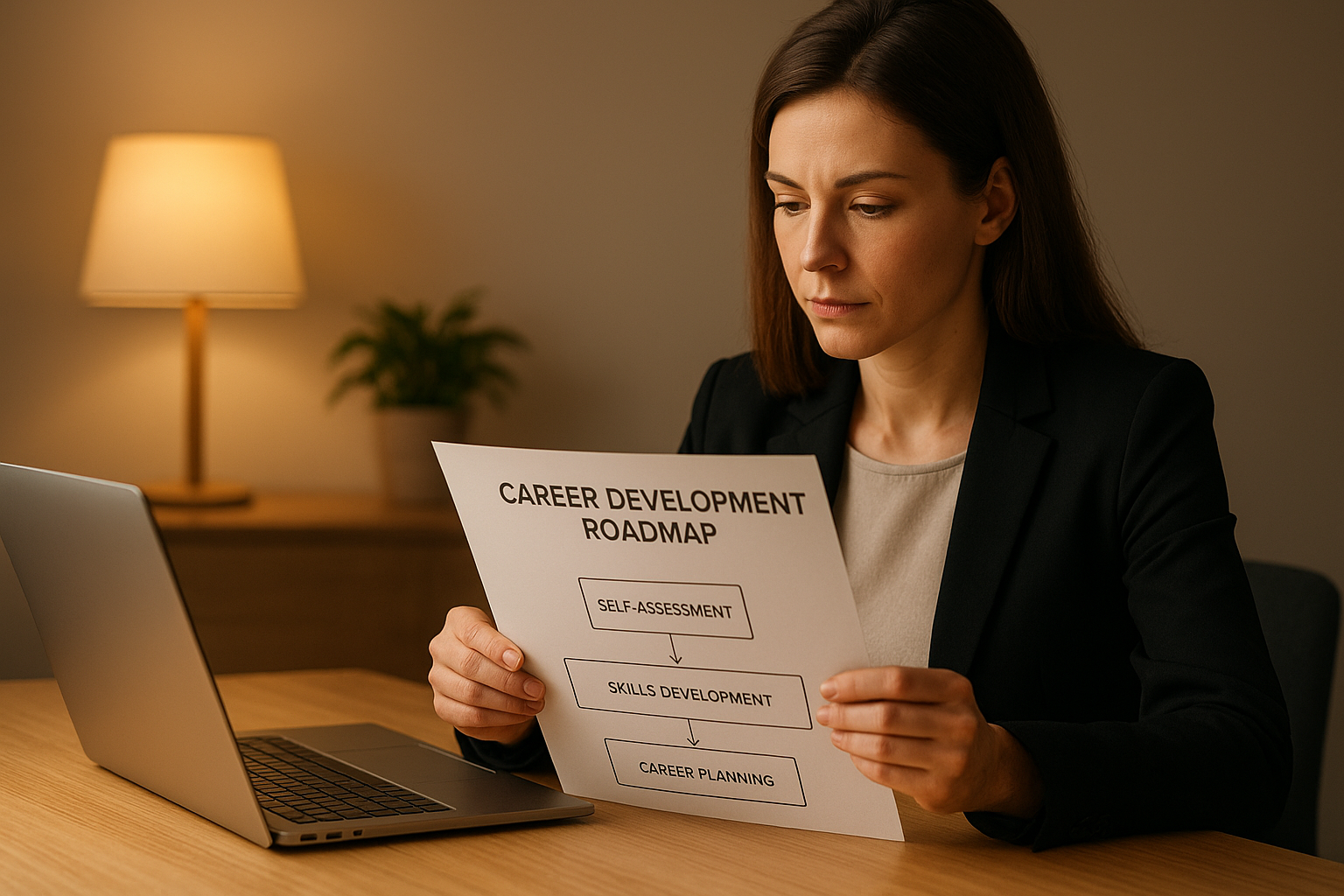
Individual development plans are the cornerstone of any program designed to support professional development long-term.
Employee Development Methods That Actually Work
Not every development opportunity requires a budget line. In fact, some of the most effective methods are low-cost or free. Here’s how to mix and match approaches based on your team’s needs.
Formal Training and Certifications
Platforms like LinkedIn Learning offer thousands of courses on everything from leadership to technical skills. Industry certifications add credibility and signal to employees that you’re serious about their advancement.
Similarly, conferences, workshops, and industry events provide both learning and networking value. Budget permitting, these are worth prioritizing for high-potential employees heading into leadership tracks.
On-the-Job Learning and Stretch Assignments
Research consistently shows that roughly 70% of learning happens on the job. Consequently, stretch assignments — projects that push employees slightly beyond their current skill level — are among the most effective development tools available.
Cross-functional projects, temporary role expansions, and job shadowing all fall into this category. They cost little but deliver significant growth — and they signal trust, which employees value deeply.
Mentoring and Peer Coaching
Pairing less experienced employees with seasoned internal mentors transfers institutional knowledge while building relationships across your organization. Above all, it creates a culture where learning is seen as a shared responsibility — not just an HR initiative.
Peer coaching circles, where small groups meet regularly to share challenges and feedback, are another low-cost, high-impact option. These work especially well in values-driven organizations where trust is already established. For more structured approaches, review our employee development strategies resource.
Tuition Reimbursement and Education Benefits
For employees pursuing degrees, licenses, or continuing education credits, tuition assistance programs are a powerful retention lever. Even a modest annual cap — say, $2,000 to $5,000 — signals long-term investment in someone’s career, not just their current role.
In particular, many employers structure these as reimbursements tied to a grade threshold or a post-completion service commitment, which protects the investment while still delivering real value to the employee.
Budgeting for Professional Development: What to Expect to Spend
Industry benchmarks suggest spending between $1,000 and $1,500 per employee per year on training and development, though this varies by industry, role, and company size. Specifically, technical and leadership roles tend to command higher budgets than entry-level positions.
However, the key is aligning investment with business goals rather than picking an arbitrary number. A useful starting point: set a baseline per-employee allowance, then layer in additional funding for high-potential employees identified through your skills assessment.
In addition, don’t forget the hidden costs — manager time spent coaching, productivity dips during stretch assignments, and administrative overhead for tracking plans. These are real costs, but they’re almost always smaller than the cost of turnover, which is where the real financial risk lives.
The Manager’s Role in Supporting Career Growth
Managers are the single biggest factor in whether professional development actually happens. They set the tone, create space for learning, and connect employees to opportunities. Therefore, no development program succeeds without manager buy-in and capability.
Specifically, managers need to know how to have development conversations, how to identify growth opportunities, and how to give feedback that builds rather than deflates. If your managers haven’t been trained in these skills, that’s where your development investment should start.
Our professional development for staff resources include guidance for managers at every level — from first-time team leads to seasoned directors navigating rapid growth.
Measuring the ROI of Your Professional Development Program
A program without metrics is just a hope. Consequently, track these indicators consistently so you can prove — and improve — the value of what you’re building:
- Retention rate among employees enrolled in development plans versus those who aren’t.
- Internal promotion rate — how often open roles get filled from within.
- Performance score changes before and after completing a development plan.
- Employee satisfaction and engagement survey scores, segmented by development participation.
- Time-to-productivity for employees who’ve completed stretch assignments or cross-training.
In particular, reviewing these metrics quarterly — not just annually — lets you catch problems early and reallocate budget toward what’s actually working.
Common Mistakes That Derail Development Programs
Even well-intentioned programs fail for predictable reasons. For example, offering one-size-fits-all training ignores the fact that a new hire and a ten-year veteran need completely different support.
Similarly, failing to connect development to a visible career path leaves employees wondering what the point was. And not following up after a course or workshop wastes the entire investment — learning without application rarely sticks.
Above all, treating development as a line item rather than a strategic priority guarantees it gets cut the first time budgets tighten. Personalization and follow-through are what separate programs that last from programs that quietly disappear.
How Soteria HR Helps You Build a Professional Development Culture
Soteria HR works with growing small and mid-sized businesses to design employee development programs that actually fit — not cookie-cutter frameworks, but tailored plans aligned with your team’s goals, your culture, and your growth stage.
As an outsourced HR partner, we take the guesswork out of building development infrastructure. From skills assessments to individual development plans to manager coaching, we handle the structure so you can focus on leading your business.
In addition, our employee development services are built to scale with you — whether you have 15 employees today or are heading toward 150. You don’t need a full HR department to run a great development program. You just need the right partner.
Ready to build a team that grows with your business?
Soteria HR designs practical, people-first professional development programs for companies just like yours. Let’s talk about what that looks like for your team.
Frequently Asked Questions About Professional Development
What does it mean to support professional development?
To support professional development means actively investing in employees’ skills, knowledge, and career growth through training, mentoring, coaching, and structured learning opportunities. It goes beyond paying for a course — it requires a culture where growth is encouraged and recognized consistently.
Why is professional development important for small businesses?
Professional development helps small businesses retain top talent, improve performance, and build the internal capacity needed to scale. According to LinkedIn’s 2023 Workplace Learning Report, 93% of employees say they would stay longer at a company that invests in their career development.
How much should a company spend on employee development?
Industry benchmarks suggest spending between $1,000 and $1,500 per employee per year on training and development, though this varies by industry and company size. The key is aligning investment with business goals rather than picking an arbitrary number.
What are the most effective professional development methods?
The most effective methods combine formal training (courses, certifications) with on-the-job learning (stretch assignments, job shadowing) and social learning (mentoring, peer coaching). A blended approach consistently outperforms single-method programs.
How do you create a professional development plan for employees?
Start by identifying the employee’s career goals and current skill gaps, then align those with the organization’s needs. Build a written plan with specific learning goals, timelines, and checkpoints, and revisit it during regular one-on-ones or performance reviews.
What is the difference between training and professional development?
Training typically focuses on specific, immediate skills needed for a current role, while professional development takes a broader, longer-term view of an employee’s growth and career trajectory. Both are valuable and ideally work together as part of a cohesive strategy.
Can outsourced HR help support professional development programs?
Yes. Outsourced HR partners like Soteria HR can design, implement, and manage professional development frameworks tailored to your team’s needs and business goals — without requiring you to hire a full in-house HR department.
How does professional development affect employee retention?
Employees who feel their employer invests in their growth are significantly more likely to stay. Lack of career development is consistently cited as a top reason people leave jobs, making development programs a powerful retention tool for any organization.
What are common mistakes companies make with employee development?
Common mistakes include offering one-size-fits-all training, failing to connect development to career paths, not following up after training, and treating development as a budget line item rather than a strategic priority. Personalization and follow-through are essential for real results.
How often should professional development conversations happen?
Development conversations should happen at minimum quarterly, ideally as part of regular one-on-one check-ins. Annual reviews alone are not enough to keep employees engaged and progressing toward their goals.
What role do managers play in supporting employee growth?
Managers are the single biggest factor in whether professional development actually happens. They set the tone, create space for learning, provide feedback, and connect employees to opportunities. Investing in manager training is therefore a prerequisite for any development program.
Are there free resources to support employee professional development?
Yes. Free or low-cost resources include LinkedIn Learning, Coursera, industry association webinars, internal knowledge-sharing sessions, and mentorship programs. A thoughtful program doesn’t have to be expensive to be effective — structure and consistency matter more than budget.
What technology or software can support a professional development program?
Learning management systems, performance review platforms, and simple shared documents can all track development plans. For most small businesses, a well-maintained spreadsheet plus quarterly check-ins works just as well as expensive software — the discipline matters more than the tool.
Does professional development look different for remote and hybrid teams?
Yes. Remote teams rely more heavily on virtual mentoring, asynchronous courses, and scheduled video check-ins since spontaneous in-office coaching isn’t available. As a result, remote development programs need more intentional structure to replace the informal learning that happens naturally in a shared office.
Conclusion: Make Professional Development Your Competitive Advantage
The decision to actively support professional development is ultimately a decision about what kind of organization you want to build. Companies that invest in their people create a compounding advantage — better performance, stronger retention, and a culture that attracts talent rather than just trying to hold onto it.
As a result, the organizations that grow most sustainably are rarely those with the biggest budgets. They’re the ones that take professional development seriously, make it personal, measure it consistently, and build it into how they operate every day.
Whether you’re starting from scratch or strengthening what you already have, Soteria HR is here to help you build a professional development program that fits your team and fuels your growth. Explore our employee development services or reach out to Soteria HR to get started today.