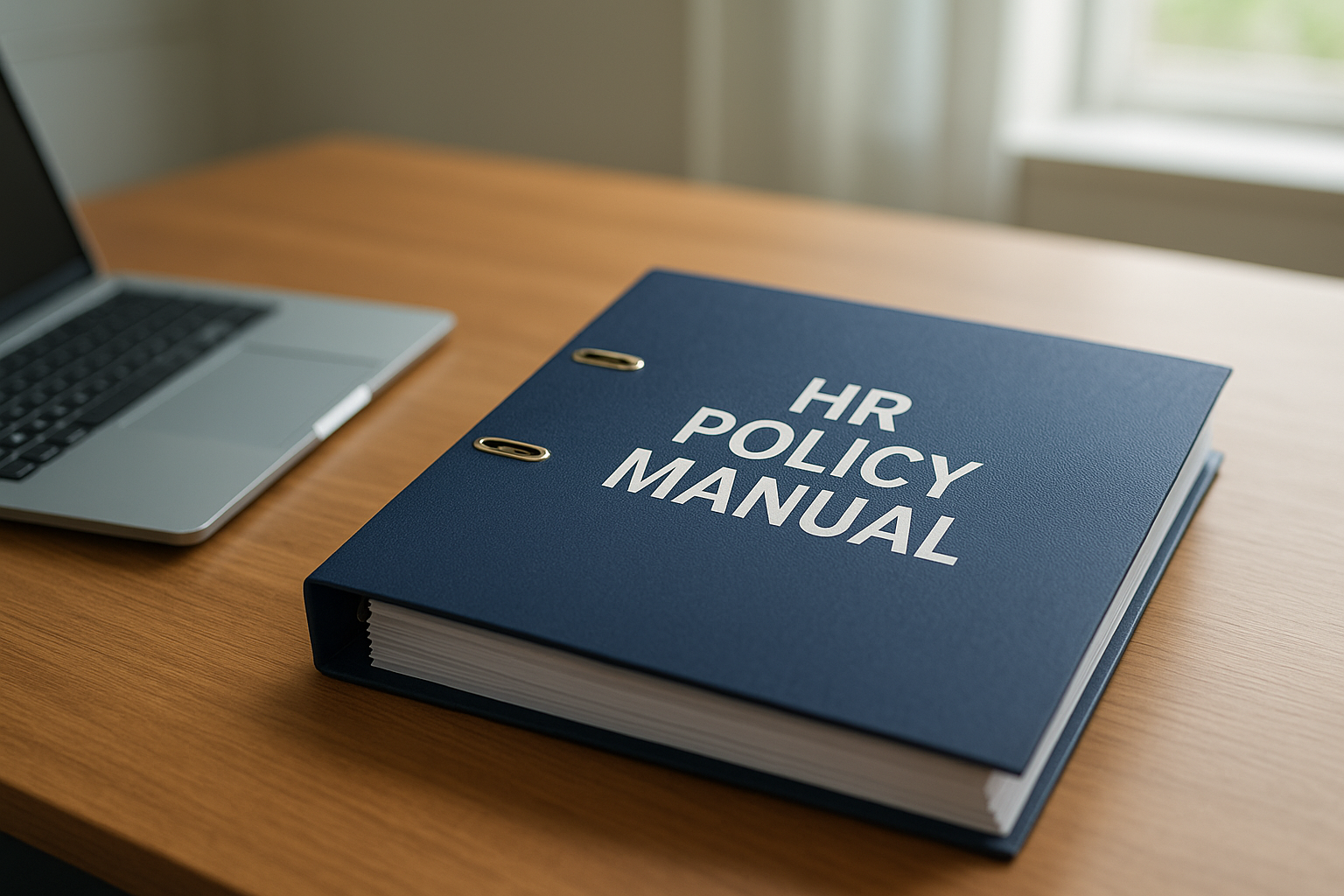
An hr policy manual sample gives growing businesses a practical starting point for building clear, consistent workplace rules without starting from a blank page. Rather than guessing what belongs in your employee handbook, you can study real examples, borrow proven language, and adapt each section to fit your industry and culture. For small and mid-size companies without a dedicated HR department, this head start often makes the difference between a policy manual that actually gets used and one that collects dust in a shared drive. Below, you will find what a strong sample includes, how to customize it, and where to get expert help.
What Is an HR Policy Manual Sample?
An HR policy manual sample is a ready-made template or model document that shows how businesses typically organize workplace policies—covering hiring, conduct, benefits, leave, safety, and termination—into one reference guide. Companies use it as a starting framework, then adjust the language, tone, and specific rules to match their size, industry, and state requirements. In short, it is a shortcut to a polished handbook, not a finished, ready-to-use legal document.
Because employment law varies by state and industry, no generic sample can serve as a final policy manual on its own. However, a well-built sample still saves significant time. It shows the standard structure—typically 15 to 25 policies—and gives a sense of tone, formatting, and depth. For example, the Society for Human Resource Management recommends that every handbook clearly define at-will employment status, anti-discrimination protections, and disciplinary procedures. Furthermore, a sample highlights gaps you might otherwise miss, such as remote work guidelines or social media rules. As a result, founders and office managers can move faster from a blank page to a compliant, culture-aligned document. Still, treat any sample as a draft; before rolling it out, review it against your state’s specific HR policies and procedures and your company’s actual practices.
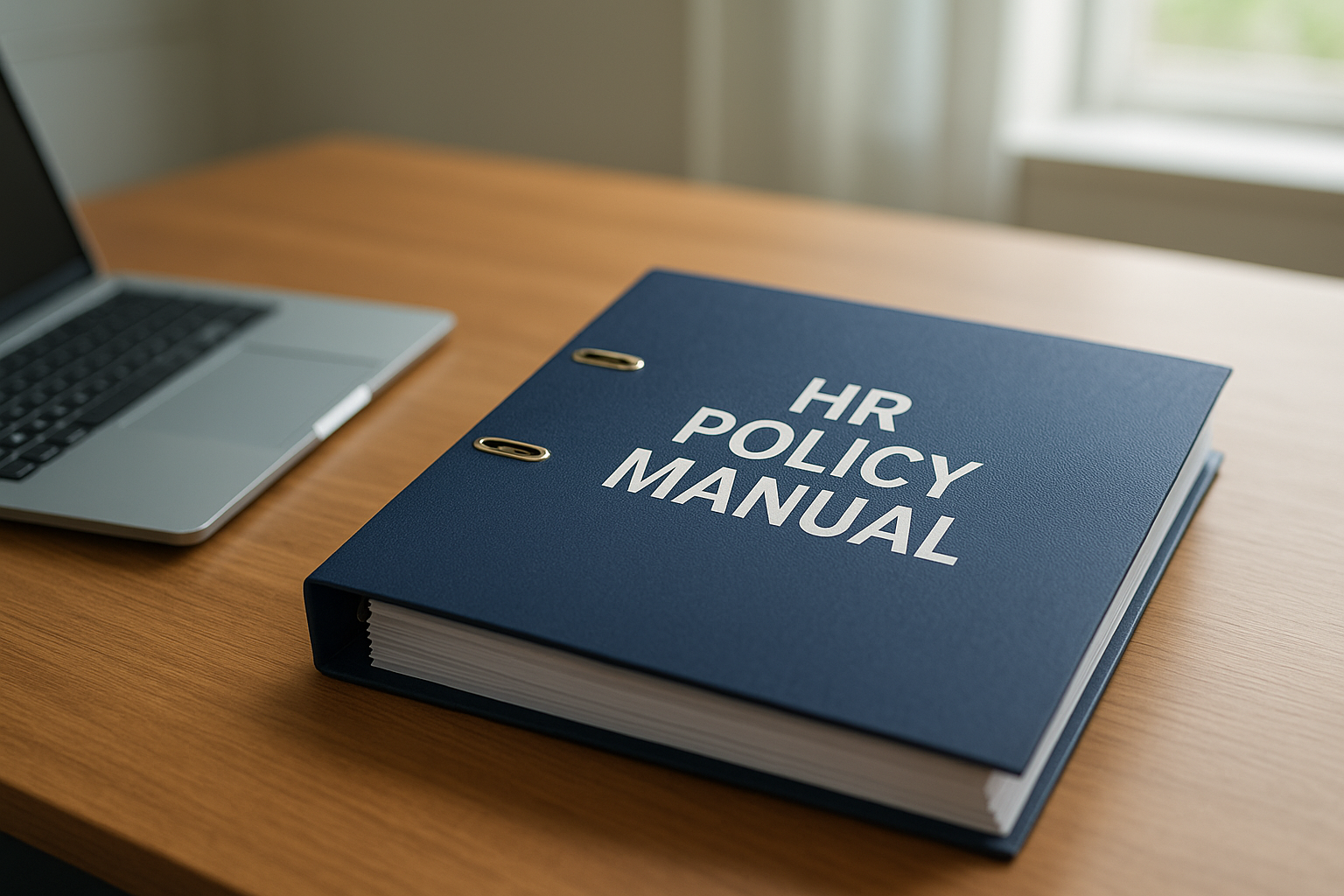
A clear hr policy manual sample helps growing teams organize workplace rules before customizing them for compliance.
Why Growing Companies Need a Clear Employee Handbook
Growing companies often delay building a formal policy manual until a problem forces the issue, such as a harassment complaint, a confusing termination, or a wage dispute. By then, the cost of not having clear policies is already mounting. In contrast, businesses that document expectations early tend to face fewer disputes and resolve the ones that do arise more quickly.
Federal law adds real weight to this decision. Specifically, businesses with 15 or more employees must comply with Title VII of the Civil Rights Act, which prohibits workplace discrimination, according to the U.S. Equal Employment Opportunity Commission. Once a company reaches 50 employees within a 75-mile radius, it also becomes subject to Family and Medical Leave Act requirements, as outlined by the U.S. Department of Labor. Without written policies explaining these obligations, employees and managers are left guessing, and guessing leads to inconsistent enforcement, which is one of the fastest ways to trigger a legal claim.
Beyond compliance, a strong handbook shapes culture. It tells new hires what your company values and what is expected from day one. Consequently, onboarding becomes smoother and employees feel the workplace is fair. For a deeper look at what belongs in this kind of document, see this guide on policies in HR manual: what every employer needs to know.
Core Sections Every HR Policy Manual Template Should Include
Most effective manuals organize policies into three broad categories. Below is a breakdown of what belongs in each.
Employment Policies and Workplace Conduct
This section should open with an at-will employment statement, followed by an equal employment opportunity policy, a code of conduct, attendance expectations, and a dress code. Above all, your anti-harassment and anti-discrimination language needs to be specific and easy to follow, since it is the section most often referenced in disputes.
Compensation, Benefits, and Time Off
Cover pay schedules, overtime eligibility, and how payroll coordination works between your team and any outside providers. In addition, spell out PTO accrual, sick leave, holidays, and benefits eligibility clearly, since vague time-off language is a common source of employee frustration.
Safety, Compliance, and Legal Protections
Include workplace safety expectations aligned with OSHA guidance, data privacy rules, and a clear termination and disciplinary process. This is also where performance-related documentation matters most; pairing your manual with structured performance improvement plan guidelines keeps discipline consistent and defensible.

Reviewing each policy together helps ensure the manual reflects real workplace practices, not just template language.
How to Build Your Own Sample HR Policy Manual in 6 Steps
Once you have a sample to work from, follow these steps to turn it into a document your business can actually rely on.
- Audit your current practices. Review your existing hiring, discipline, and leave practices to see what’s already working before you start writing anything new.
- Select a base HR policy manual sample. Choose a sample or template that matches your industry and company size so you have realistic structure and section headings to build from.
- Customize for state and federal law. Adjust every policy to reflect your state’s specific leave, wage, and safety laws, since generic samples rarely account for local requirements.
- Write in plain, consistent language. Replace legal jargon with clear, simple wording so employees actually understand what each policy means and how it applies to them.
- Get expert or legal review. Have an employment attorney or outsourced HR partner review the draft to catch compliance gaps before you distribute it to your team.
- Roll out, train, and collect acknowledgment. Introduce the handbook during onboarding or a team meeting, then have every employee sign an acknowledgment form confirming they received and reviewed it.
Common Mistakes to Avoid When Writing HR Policies
Even with a good starting sample, businesses often stumble in the same predictable places. Watch for these pitfalls.
- Copying a generic template word-for-word without adjusting it for state law.
- Failing to update the manual after wage, leave, or safety laws change.
- Writing policies too vague to enforce consistently across departments.
- Skipping employee acknowledgment signatures, which weakens legal protection.
- Letting different managers apply the same policy differently.
- Ignoring newer topics like remote work, social media, or AI use at work.
Notably, outdated policies create as much risk as missing ones. That’s why it’s worth reviewing this resource on updating HR policies and procedures at least once a year, or sooner if your headcount crosses a compliance threshold like 15 or 50 employees.
Free HR Policy Manual Sample vs. a Custom HR Playbook
A free sample is a great way to see the standard shape of a manual, and it can absolutely jump-start your first draft. Similarly, a downloadable HR policy manual template built for growing teams can help you fill in structure quickly. However, samples cannot account for your specific state laws, industry risks, or company culture the way a custom-built HR playbook can.
This is where outsourced HR support earns its keep. At Soteria HR, custom HR playbooks are built around your actual growth stage, team size, and industry, then kept current as laws change. Instead of guessing whether a free template covers your obligations, you get a document reviewed by people who do this work every day. Therefore, many growing companies use a sample to get oriented, then bring in expert support to finalize a manual they can trust.
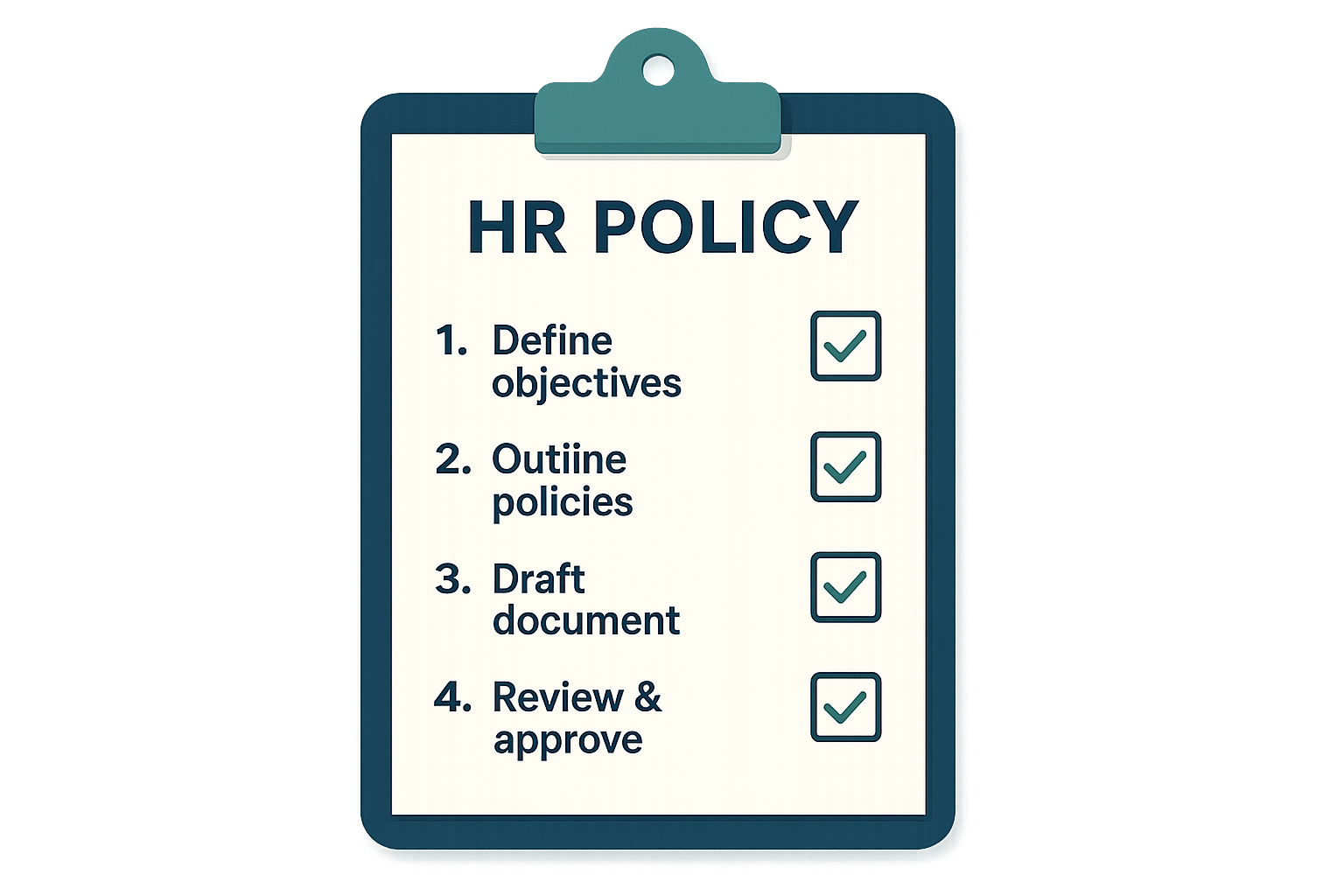
Turning a generic checklist into a finished HR policy manual sample usually takes expert review and state-specific customization.
Frequently Asked Questions About HR Policy Manual Samples
What is an HR policy manual sample?
An HR policy manual sample is a template or example document showing how businesses typically structure their workplace policies. It covers areas like hiring, conduct, benefits, and termination, and serves as a starting point you customize for your own company.
How is an HR policy manual different from an employee handbook?
The terms are largely interchangeable in practice, though some companies treat the policy manual as the detailed internal reference and the handbook as the employee-facing summary. Either way, both documents should align with each other.
What sections should a small business include first?
Start with at-will employment status, anti-discrimination and harassment policies, attendance expectations, and pay practices. These sections carry the highest legal risk if left undefined.
How long should an HR policy manual be?
Most small to mid-size company manuals run 15 to 30 pages, covering 20 to 30 individual policies. Length matters less than clarity, so avoid padding it with unnecessary legal language.
How much does it cost to create an HR policy manual?
Costs vary widely, from free templates to several thousand dollars for a fully customized, attorney-reviewed playbook built by an outsourced HR partner. The right choice depends on your company’s size and risk exposure.
How long does it take to build a policy manual?
A basic manual built from a solid HR policy manual sample can take two to four weeks, including internal review. A fully custom playbook with legal review often takes six to eight weeks.
Can I use a free HR policy manual template as my final document?
Generally, no. Free templates are a helpful starting structure, but they rarely reflect your state’s specific labor laws or your company’s actual practices, so customization and review are still necessary.
What is the biggest mistake companies make with policy manuals?
The most common mistake is copying a generic template word-for-word without adjusting it for state law or actual workplace practices. This creates policies that are unenforceable or even contradict local requirements.
How often should we update our HR policies?
Review your manual at least once a year and immediately after any significant law change, such as new leave requirements or minimum wage updates. Growing headcount past 15 or 50 employees also triggers new compliance obligations.
Do employees need to sign an acknowledgment form?
Yes. Every employee should sign a form confirming they received, read, and understood the policy manual. This documentation protects the company if a policy is later disputed.
What is the difference between a policy and a procedure?
A policy states the rule or expectation, such as requiring 30 days’ notice for planned leave. A procedure explains the step-by-step process employees follow to comply with that policy.
Should multi-state employers have separate policy manuals per location?
Often yes, or at minimum a core manual with state-specific addenda. Leave laws, wage rules, and paid sick time requirements differ significantly from state to state.
Who should write the HR policy manual?
Ideally, an HR professional or outsourced HR partner drafts it with input from leadership and legal counsel. This combination ensures the manual reflects both compliance requirements and real company culture.
Can outsourced HR help create or update our manual?
Yes. Outsourced HR providers build custom manuals aligned with your industry, size, and state, then keep them updated as laws change, removing that burden from busy founders and office managers.
Key Takeaways
An hr policy manual sample is a smart way to start, but it should never be the finish line. Use a sample to understand structure and tone, then customize every section for your state, industry, and team size. Above all, build in a review process—whether that’s legal counsel or an outsourced HR partner—so your manual actually protects the business instead of creating false confidence. If you’d rather skip the guesswork, talk to an HR expert at Soteria HR about building a custom playbook that fits exactly where your company is headed.