Hiring someone new is exciting, until you realize how much paperwork, compliance documentation, and coordination goes into getting them set up. If you’re running a growing company with 10 to 250 employees, a messy onboarding process doesn’t just frustrate new hires; it creates real compliance risk and early turnover. That’s exactly why finding the right onboarding software for small business teams has become a priority for leaders who want to scale without dropping the ball on day one.
At Soteria HR, we help growing organizations build people programs that actually work, onboarding included. We’ve seen firsthand how the right tool can turn a chaotic first week into a smooth, professional experience that sets the tone for long-term retention. We’ve also seen what happens when companies try to duct-tape it together with spreadsheets and email chains. (Spoiler: it costs you good people.)
This guide breaks down 12 onboarding platforms worth considering in 2026, with a focus on what matters most to small and mid-sized teams: ease of use, compliance features, integration with your existing systems, and actual value for the price. We’ll cover what each tool does well, where it falls short, and which type of business it fits best. Whether you’re onboarding your 10th employee or your 200th, this list will help you make a smarter choice, so your new hires feel welcome and your operations stay tight.
1. Soteria HR — Onboarding Software for Small Business — Onboarding Software for Small Business — Onboarding Software for Small Business — Onboarding Software for Small Business — Onboarding Software for Small Business — Onboarding Software for Small Business — Onboarding Software for Small Business — Onboarding Software for Small Business — Onboarding Software for Small Business — Onboarding Software for Small Business — Onboarding Software for Small Business — Onboarding software for small business — Onboarding software for small business — Onboarding software for small business — Onboarding software for small business — Onboarding software for small business — Onboarding software for small business — Onboarding software for small business — Onboarding software for small business — Onboarding software for small business — Onboarding software for small business — Onboarding software for small business
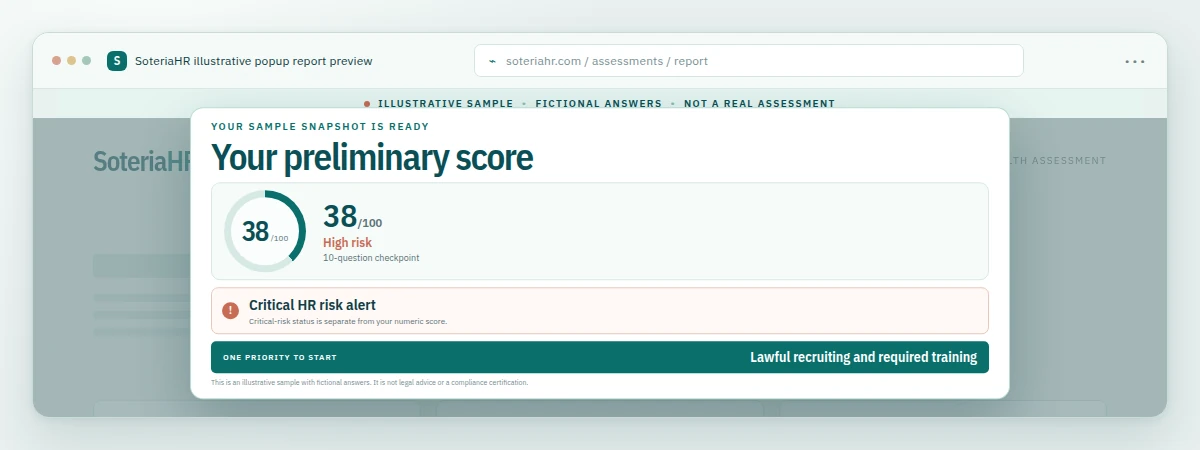
Soteria HR is not a plug-and-play software platform. It’s a fully managed outsourced HR solution built specifically for small and mid-sized companies that need real HR expertise, not just another dashboard. If your team is growing and your onboarding process feels like organized chaos, Soteria steps in as your embedded HR partner to handle the details that keep new hires moving forward and your business protected.
Best for
This solution works best for companies between 10 and 250 employees that need hands-on HR support without building an internal department. It’s especially well-suited for founders, operations leaders, and people managers who are wearing multiple hats and need a trustworthy partner to own the onboarding process, not just advise on it.
What you get
When you work with Soteria, you get a full-service HR team assigned to your organization. That includes compliance oversight, policy development, benefits coordination, and structured onboarding workflows. Soteria builds your people programs around your business goals, your team culture, and the specific regulations that apply to your industry and state. This is hands-on HR, not a self-service portal.
For small businesses without internal HR expertise, having a dedicated partner manage onboarding from offer letter through day 90 eliminates the compliance gaps that most commonly drive early turnover.
How onboarding works with Soteria
Soteria designs and manages your onboarding process end to end. That covers everything from preparing compliant offer letters and new hire documentation to coordinating equipment, benefits enrollment, and role-specific orientation plans. Your new hires get a structured, professional experience from day one, and you get visibility and peace of mind without doing the administrative heavy lifting yourself.
Your team also benefits from custom HR playbooks that standardize the onboarding process across departments, so every new hire gets the same quality experience whether you’re a team of 15 or 150. This is one of the biggest gaps most small businesses face when evaluating onboarding software for small business needs: tools give you structure, but a partner gives you strategy.
Software support and integrations
Soteria works alongside the tools you already use. Whether your business runs on payroll platforms, HRIS systems, or applicant tracking tools, Soteria coordinates with your existing tech stack to ensure onboarding data flows where it needs to go without duplication or manual re-entry. The focus is on clean handoffs between hiring and onboarding with no dropped details.
Limitations to consider
Keep in mind that Soteria is not a self-service software tool. If you’re looking for a DIY platform you can configure and run independently, this isn’t the right fit. The model works best for organizations that want expert HR management rather than another app to manage, and it rewards businesses that are ready to invest in building strong people practices over time.
Pricing approach
The pricing model is fully customized based on your company’s size, needs, and the specific HR services you require. There’s no one-size-fits-all package, which means you pay for what your business actually needs rather than a suite of features you’ll never use. Contact Soteria directly to discuss what the right engagement looks like for your team.
2. BambooHR
BambooHR is one of the most recognized HR platforms for small and mid-sized businesses, offering a well-rounded suite that covers hiring, onboarding, performance, and people management in one place. If you’re evaluating onboarding software for small business teams and want a purpose-built HR system rather than a generic project tool, BambooHR is worth a close look.
Best for
BambooHR works best for small to mid-sized businesses that want an all-in-one HR system with onboarding baked in. It fits teams that hire regularly and need a repeatable, structured process without building everything from scratch on their own.
Key onboarding features for onboarding software for small business for onboarding software for small business for onboarding software for small business for onboarding software for small business for onboarding software for small business for onboarding software for small business for onboarding software for small business for onboarding software for small business for onboarding software for small business for onboarding software for small business for onboarding software for small business
BambooHR gives new hires a self-service onboarding portal where they can complete paperwork, review policies, and submit personal information before their first day. This cuts down on day-one friction and gives managers a cleaner, more professional start.
Getting paperwork done before day one frees your team to spend that first week on culture, connection, and actual job training.
Document management and e-signatures
The platform handles document storage and electronic signatures natively, so you don’t need a separate tool for collecting signed offer letters, NDAs, or policy acknowledgments. All completed documents live in the employee’s profile and are easy to locate and retrieve during a compliance audit.
Automation and workflows
BambooHR lets you build onboarding task lists and automated reminders that notify managers, IT, and new hires when action is needed. You can also configure role-specific workflows so each new hire gets the right checklist for their position without requiring manual setup every time someone new joins.
Limitations to consider
The onboarding tools are solid but not the most customizable on the market. If your process involves complex, multi-department coordination or industry-specific compliance steps, you may hit the limits of what the platform handles without workarounds.
Pricing approach
BambooHR uses a per-employee, per-month pricing model with two core tiers. Exact pricing requires a direct quote through their website, as rates vary by company size and selected features.
3. Gusto
Gusto is a payroll-first platform that has expanded into full HR territory, making it a popular choice for small businesses that want onboarding and payroll in a single system. If your biggest pain point is getting new hires set up for pay correctly from day one, Gusto was built with that exact problem in mind.
Best for
Small businesses with 1 to 100 employees that prioritize payroll accuracy and want onboarding baked into the same tool will get real value here. It’s a strong fit for teams without a dedicated HR department that need an affordable, user-friendly system to handle the basics well.
Key onboarding features for onboarding software for small business
New hires move through a guided digital onboarding flow that collects personal details, tax withholding preferences, direct deposit information, and required policy acknowledgments before their first day of work. Managers can track completion status in real time and send reminders without chasing anyone down manually.
Getting payroll setup right during onboarding prevents costly errors and compliance headaches before they ever start.
Payroll and tax setup during onboarding
One area where Gusto genuinely stands out as onboarding software for small business teams is the tight connection between new hire setup and payroll processing. When an employee finishes onboarding, their W-4 information, pay rate, and direct deposit details flow directly into payroll without any manual data transfer, which reduces errors and makes your first payroll run with a new hire significantly cleaner.
Forms, signatures, and self-service
The platform handles federal and state tax forms electronically, including W-4s and state withholding documents, and collects e-signatures directly in the system. Your new hires can complete everything from a phone or computer, and all signed documents are stored automatically in their profile without any extra filing on your end. For a deeper walkthrough, see our Outsourcing Human Resource Functions: Your Complete Guide.
Limitations to consider
Gusto is not built for complex HR needs. If you need advanced performance management, detailed role-based onboarding workflows, or multi-location compliance support, the platform will feel limited quickly. Its core strength is simplicity over depth.
Pricing approach
Pricing runs on a tiered monthly structure starting with a Simple plan and moving up to Plus and Premium options. Each tier adds HR features, and you pay per employee per month on top of a base fee.
4. Zoho People
Zoho People is a cloud-based HR platform designed to grow with your organization. It sits inside the broader Zoho ecosystem, which means if your business already uses Zoho CRM, Books, or Recruit, you’ll find the integration points genuinely useful rather than forced.
Best for
Zoho People fits budget-conscious small and mid-sized businesses that want a flexible, feature-rich HR platform without paying enterprise-level prices. It’s a strong option for teams that operate across multiple locations or time zones and need a centralized place to manage people data.
Key onboarding features for onboarding software for small business
The platform gives new hires a guided digital experience that walks them through document submission, policy review, and role-specific tasks before or on their first day. Managers get a real-time overview of where each new hire stands in the process, so nothing slips through without a clear owner.
A structured digital onboarding flow reduces the chance of missing critical compliance steps that can create legal exposure later.
Document storage and access controls
Zoho People stores all employee documents in a centralized, permission-based repository, which means you control exactly who can view, edit, or download sensitive information. This is especially important for small businesses evaluating onboarding software for small business needs, since compliance document management often gets overlooked until it becomes a problem during an audit.
Workflow automation and reminders
You can configure automated task assignments and deadline reminders that keep both new hires and internal stakeholders on track without requiring someone to manually follow up. The platform supports multi-step onboarding workflows that trigger based on role, department, or start date, so your process stays consistent as your team grows.
Limitations to consider
The interface can feel cluttered and less intuitive compared to platforms like BambooHR or Gusto. Teams without a dedicated HR professional may spend more time in setup than expected, and customer support response times have been a recurring concern in user reviews.
Pricing approach
Zoho People offers tiered pricing plans starting at a very accessible per-employee monthly rate, making it one of the more affordable full-featured HR platforms available for small business teams.
5. Workable
Workable started as an applicant tracking system (ATS) and has since grown into a broader HR platform that now includes structured onboarding functionality. If your small business struggles most with the gap between a signed offer and a fully set-up employee, Workable was built with that exact transition in mind.
Best for
This platform fits small to mid-sized businesses that do a consistent volume of hiring and want their recruiting and onboarding workflows living in the same system. It works especially well for teams already using Workable for hiring who want to extend that investment into the post-offer stage without switching tools.
Key onboarding features for onboarding software for small business
The platform lets you create onboarding tasks, assign owners, and set due dates so every new hire moves through a consistent process without requiring someone to manually track progress. You can also send welcome emails and preboarding checklists before the start date to collect paperwork early and reduce day-one friction.
Getting paperwork and task assignments out the door before day one lets your team focus that first week on connection and job training rather than forms.
Templates and checklists
Workable gives you prebuilt onboarding templates you can customize by role, department, or location. Each checklist supports task assignments across multiple stakeholders, whether that’s IT, the hiring manager, or HR, so ownership is clear and nothing falls through because no one knew who was responsible.
Hiring to onboarding handoff
This is where Workable earns its spot on any list of onboarding software for small business teams that also use it for recruiting. Once a candidate accepts an offer, their profile and hiring data move directly into the onboarding workflow without manual re-entry, which cuts errors and saves your team real administrative time.
Limitations to consider
Workable’s onboarding tools are more limited than dedicated HR platforms like BambooHR. If you need advanced document management, e-signatures, or deep compliance tracking, you may need to add separate tools to cover those gaps.
Pricing approach
Workable offers a per-seat pricing model with onboarding features available on higher-tier plans. You’ll need to request a direct quote to get exact pricing based on your team size and hiring volume.
6. WorkBright
WorkBright is a mobile-first onboarding platform built specifically around compliance and remote hiring. If your team hires people who work in the field, across multiple locations, or who never set foot in an office before their start date, WorkBright gives those new hires a way to complete everything from their phone without printing a single page.
Best for
WorkBright fits small to mid-sized businesses that hire frequently in distributed or deskless environments, such as healthcare, nonprofits, construction, and seasonal industries. It’s especially valuable for any organization where I-9 compliance and remote document collection are consistent pain points.
Key onboarding features for onboarding software for small business
The platform sends new hires a mobile-friendly onboarding packet they can complete from any device before their start date. You get real-time status tracking so you always know who has finished their paperwork and who still needs a nudge, which matters when you’re coordinating multiple new hires across different sites.
Completing onboarding paperwork before day one is one of the most direct ways to reduce early turnover and protect your business from compliance gaps.
Compliance and I-9 workflow
WorkBright handles Form I-9 verification remotely, which is one of the most compliance-sensitive parts of the onboarding process for any employer. The platform uses an authorized representative workflow that allows someone local to the new hire to verify documents, so you stay compliant without requiring the employee to visit a physical office.
Remote onboarding experience
This is where WorkBright earns its reputation as strong onboarding software for small business teams that operate across locations. The platform is designed from the ground up for a mobile-first, remote-ready experience, so new hires are not fighting a clunky interface on their phone just to submit a direct deposit form.
Limitations to consider
WorkBright is narrowly focused on onboarding, which means it does not replace a full HR platform. If you need performance management, payroll, or benefits administration in the same system, you will need additional tools to cover those functions.
Pricing approach
WorkBright prices on a per-employee basis and offers plans suited to small and growing teams. Reach out directly for a quote based on your hiring volume and feature needs.
7. Click Boarding
Click Boarding is a dedicated employee onboarding platform that focuses on building a structured, engaging experience for new hires from offer acceptance through their first weeks on the job. Unlike broader HR platforms that treat onboarding as one tab among many, Click Boarding puts the new hire journey at the center of the product, making it a strong contender for any business that wants onboarding to feel intentional rather than administrative.
Best for
Click Boarding works well for small to mid-sized businesses that want a purpose-built onboarding tool rather than a feature tucked inside a larger HR system. It fits organizations that hire across multiple roles or locations and need a consistent, repeatable experience that can be tailored without starting from scratch every time.
Key onboarding features for onboarding software for small business
The platform gives new hires a guided, mobile-friendly onboarding experience that walks them through required tasks, forms, and company-specific content in a logical sequence. Managers and HR admins get a clear dashboard view of each new hire’s progress, so you can spot bottlenecks and step in before anyone falls behind.
A well-structured onboarding sequence reduces the chance of missing compliance steps and gives new hires a stronger first impression of your organization.
Workflow customization
Click Boarding lets you build role-specific onboarding workflows with different task sequences, content, and timelines depending on the position or department. This is one of the stronger use cases for onboarding software for small business teams that hire across diverse functions and need each process to reflect the actual job, not a generic checklist.
Integrations and data flow
The platform connects with popular HRIS, ATS, and payroll systems so new hire data moves cleanly from recruiting into onboarding without manual re-entry. This matters because duplicate data entry is one of the most common sources of onboarding errors for growing teams.
Limitations to consider
Click Boarding is focused on onboarding, so it does not serve as a full HR platform. You will need separate tools for payroll, benefits, and ongoing performance management.
Pricing approach
Click Boarding provides custom pricing based on your company size and feature requirements. Contact them directly for a quote tailored to your needs.
8. Workforce.com
Workforce.com is a workforce management platform built around scheduling, time tracking, and compliance, with onboarding features designed to get new hires operational without delay. It’s a practical option for businesses that need to connect the hiring process directly to shift scheduling and labor operations from day one.
Best for
Workforce.com fits small to mid-sized businesses in shift-based industries like retail, hospitality, healthcare, and logistics. If your new hires need to be on the schedule within days of joining, this platform keeps onboarding and scheduling in the same system so nothing gets missed between those two functions.
Key onboarding features for onboarding software for small business
The platform gives new hires a digital onboarding experience where they can complete required tasks and submit information before their first shift. Managers get visibility into each new hire’s status so they can confirm someone is ready to work before putting them on the schedule.
Forms and employee data collection
Workforce.com collects key employee information digitally during onboarding, including personal details, tax forms, and direct deposit setup. This is one of the more practical benefits of using it as onboarding software for small business teams in operational environments, since getting payroll data right from the start prevents the kind of errors that damage trust fast.
Collecting accurate payroll and scheduling data before day one reduces the administrative scramble that typically slows down a new hire’s first week.
Time tracking and scheduling tie-ins
Once an employee completes onboarding, their profile feeds directly into scheduling and time tracking, so you don’t have to manually enter them into a separate system. This tight connection between onboarding data and operational tools is where Workforce.com stands apart from broader HR platforms.
Limitations to consider
The platform is not a full HR system. If you need performance management, benefits administration, or robust document storage, you’ll need to supplement Workforce.com with additional tools to cover those gaps.
Pricing approach
Workforce.com offers tiered pricing plans based on team size and features. Contact them directly for a quote tailored to your specific workforce needs.
9. monday CRM
monday CRM is a flexible work and project management platform that many small businesses adapt into a functional client and employee onboarding system. It doesn’t come with HR-specific onboarding features out of the box, but if your team already lives inside monday.com, you can build structured onboarding workflows without switching to a separate tool.
Best for
monday CRM works best for small businesses and operations teams that already use monday.com for project management and want to extend it into a lightweight onboarding tool. It fits organizations comfortable configuring their own workflows rather than working from a pre-built HR system.
Key onboarding features for onboarding software for small business
The platform gives you customizable boards and task structures you can shape into onboarding workflows for new clients or employees. Each item on the board carries status columns, assignees, and due dates, so your team can track progress across every onboarding step without digging through email threads.
Building your onboarding process inside a tool your team already uses every day reduces the friction that causes tasks to get missed or ignored.
Templates, boards, and visibility
monday CRM provides prebuilt onboarding templates you can pull in and customize to match your process. Each board gives stakeholders across departments a real-time view of where a new hire or client stands, which eliminates the need to chase status updates through separate messages or meetings.
Automations and handoffs
You can configure automated notifications and task triggers that move items forward when one step is completed. This is especially useful for multi-step onboarding sequences where different team members need to take action at different points without someone manually tracking who does what next.
Limitations to consider
monday CRM is not built for HR compliance work. It lacks native e-signature support, I-9 processing, and payroll integration, which means it works better as a coordination layer than a complete solution for businesses with strict compliance requirements.
Pricing approach
monday CRM uses a per-seat pricing model with several tiers. As onboarding software for small business teams, it can be cost-effective if you’re already paying for the platform and want to stretch its use across more workflows.
10. GuideCX
GuideCX is a client onboarding and project delivery platform built to make the post-sale experience transparent for both your internal team and your customers. Unlike employee-focused tools, GuideCX centers on bringing new clients through implementation with clarity on both sides of the relationship.
Best for
GuideCX fits small to mid-sized B2B companies that sell software, services, or complex products requiring a structured implementation process. If your team spends significant time coordinating client onboarding tasks across internal and external stakeholders, this platform was designed with exactly that problem in mind.
Key onboarding features for onboarding software for small business
The platform tracks every onboarding task, milestone, and stakeholder in one place. Your team gets a full view of where each client stands, and your clients get a clear picture of what’s expected from them at every stage without having to send an email asking for an update.
Giving clients real-time visibility into their own onboarding progress reduces back-and-forth communication and builds confidence in your team from day one.
Client-facing onboarding portal
GuideCX gives each client their own branded portal where they can see assigned tasks, submit required information, and track progress through the onboarding journey. This makes it one of the more practical options when you’re evaluating onboarding software for small business teams that manage client relationships rather than employee workflows. Clients stay engaged because the experience is clear, not buried in a shared inbox.
Project templates and timelines
You can build reusable onboarding playbooks that standardize the client journey without rebuilding the process from scratch every time. Each template supports custom timelines, role assignments, and task dependencies, so your team follows the same proven sequence for every new client while still allowing flexibility when a specific situation calls for it.
Limitations to consider
GuideCX is built for client onboarding, not employee onboarding. It does not include HR compliance tools, payroll integration, or internal people management features, so it serves a specific use case rather than a broad HR need.
Pricing approach
GuideCX offers custom pricing based on your team size and onboarding volume. Contact them directly for a quote.
11. Dock
Dock is a client onboarding and collaboration platform that gives your customers a single, organized workspace for everything related to their relationship with your business. Rather than scattering resources across email attachments, shared drives, and disconnected messages, Dock pulls everything into one branded portal your clients can access at any point during the onboarding process.
Best for
Dock works well for B2B companies, agencies, and consultants that deliver services or software engagements where the client needs to stay actively involved throughout the process. It fits small teams that want to give clients a polished, professional experience without investing significant time building a custom solution from scratch.
Key onboarding features for onboarding software for small business
The platform lets you build client-specific workspaces that include task lists, embedded content, links, and status updates all in one place. Your clients log in and immediately see what they need to do, what you’ve shared, and how far along they are in the onboarding journey, which cuts down significantly on status-check emails and repeated follow-ups.
Client workspaces and shared checklists
Dock gives each client their own dedicated workspace where mutual action items live alongside your shared resources. You can build shared checklists that both your team and the client update, which creates real accountability on both sides without requiring a separate project management tool to track who has done what and when.
A shared, visible checklist gives clients a clear sense of progress and reduces the back-and-forth that stalls most onboarding timelines.
Content, assets, and engagement tracking
As onboarding software for small business teams managing client relationships, Dock lets you embed documents, videos, and links directly into the workspace. You also get engagement tracking data that shows which resources your client has actually viewed, so you know whether a follow-up conversation is needed before moving to the next phase.
Limitations to consider
Dock is not an employee onboarding tool. It serves the client relationship side of onboarding and does not include HR compliance features, payroll integration, or people management functionality.
Pricing approach
Dock offers a free plan with paid tiers available for teams that need more workspaces, advanced tracking, and branding options. Check their website directly for current pricing details.
12. OnRamp
OnRamp is a client onboarding platform built to reduce the manual coordination that typically slows down complex customer implementations. It gives both your internal team and your clients a shared, structured space to track progress, complete tasks, and move through each onboarding phase without relying on email chains or status-check calls to keep things moving.
Best for
OnRamp fits B2B companies and service providers that manage multi-step client onboarding with several stakeholders involved on both sides of the relationship. It works especially well for small teams that need to scale a repeatable onboarding process without adding headcount just to manage the coordination work manually.
Key onboarding features for onboarding software for small business
The platform combines customer-facing portals with internal workspace tools so your team can manage what the client sees while tracking internal deliverables separately. Every task, deadline, and stakeholder responsibility lives in one place, which removes the confusion that typically comes when onboarding runs through a shared inbox.
Keeping internal and external tasks in a single system eliminates the version control problems that slow most onboarding timelines down.
Customer portal and internal workspace
OnRamp gives your clients a dedicated onboarding portal where they can view assigned tasks, submit required information, and track their own progress in real time. Your team gets a parallel internal view that shows what’s happening behind the scenes without surfacing internal notes or private task details to the customer.
Playbooks, automation, and reporting
OnRamp lets you build reusable onboarding playbooks that standardize your client journey across every new account without rebuilding the process from scratch each time. You can configure automated task triggers and deadline reminders that push the process forward when action is completed, and built-in reporting gives you a clear picture of where clients consistently get stuck.
Limitations to consider
OnRamp is not designed for employee onboarding, so it should not be evaluated as onboarding software for small business HR programs. There are no compliance tools, payroll connections, or people management features included in the platform.
Pricing approach
OnRamp offers custom pricing based on your team size and onboarding volume. Reach out to them directly to get a quote that fits your actual needs.
Next steps for onboarding software for small business for onboarding software for small business for onboarding software for small business for onboarding software for small business for onboarding software for small business for onboarding software for small business for onboarding software for small business for onboarding software for small business for onboarding software for small business for onboarding software for small business for onboarding software for small business
Choosing the right onboarding software for small business teams comes down to knowing what problem you’re actually trying to solve. If you need a self-service HR platform, tools like BambooHR, Gusto, or WorkBright give you solid options at reasonable price points. If you’re managing client onboarding, GuideCX, Dock, and OnRamp are worth your attention. And if you want a partner who handles the entire HR function, including onboarding, so you don’t have to manage another platform on your own, Soteria HR is built for exactly that.
Your people deserve a first week that reflects the culture you’re trying to build, not a pile of PDFs and follow-up emails. Soteria takes that off your plate and puts the strategy behind it. If you’re ready to fix your onboarding process and build stronger HR practices from the ground up, schedule a consultation with Soteria HR and let’s talk about what your team actually needs.