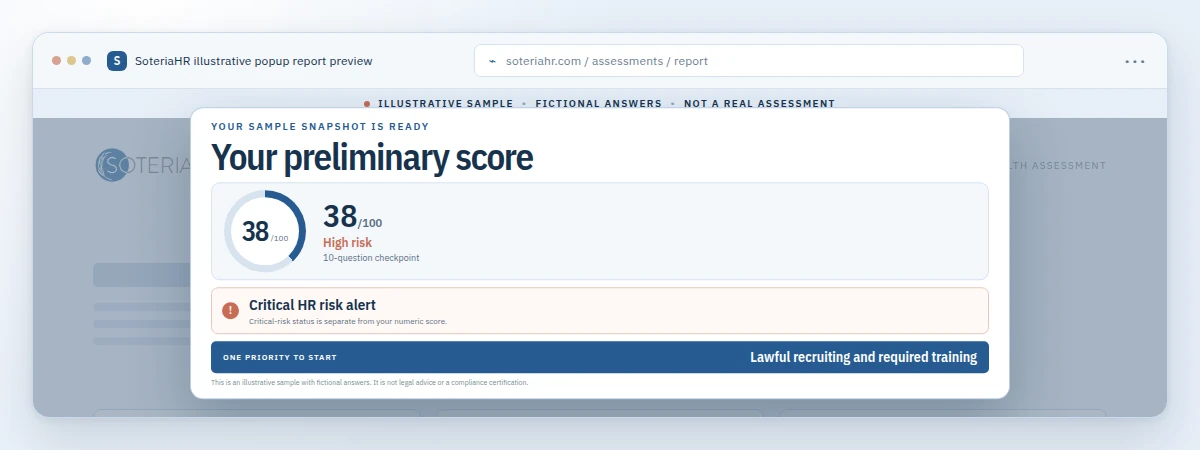
Talent management consultants help growing companies build the systems that attract, develop, and retain great employees. If you are leading a business with 10 to 250 employees, you have probably felt the strain of hiring fast, keeping turnover low, and staying compliant all at once. In fact, according to SHRM’s workforce research, a majority of HR professionals say finding qualified talent is harder now than it was even a year ago. This guide breaks down what talent management consultants actually do, when to bring one in, and how to choose the right partner for your stage of growth.
Quick answer: Talent management consultants are HR specialists who design and run programs for hiring, developing, and retaining employees. Growing companies bring them in when they need senior-level HR strategy without the cost of a full-time executive.

Talent management consultants often start with a hands-on strategy session to understand a company’s goals.
What Are Talent Management Consultants?
Talent management consultants are outside HR specialists who help companies design and run programs for recruiting, developing, and retaining employees. Rather than replacing your team, they typically work alongside your leadership to fill gaps in HR strategy. Most bring experience across multiple industries, so they have often already solved the exact problem you are facing.
Talent management itself refers to the ongoing process of managing an employee’s entire journey with your company, from the first interview through eventual promotion or departure. It is a broader concept than recruiting alone, covering performance reviews, career development, succession planning, and engagement. As a result, many growing businesses now treat talent management as a core strategic function rather than an afterthought, much like the overview described on Wikipedia’s talent management entry.
Why Growing Companies Hire Outsourced Talent Management Experts
Small and mid-sized companies rarely have the budget for a full internal HR executive team. As a result, many turn to talent management experts who can step in on a fractional or project basis. For example, a 25-person company scaling toward 75 employees often needs help building onboarding programs, performance frameworks, and succession plans quickly.
In addition, the cost of a bad hire can range from one-half to two times that employee’s annual salary, according to SHRM research. Therefore, bringing in outside expertise early often pays for itself many times over. Firms such as Soteria HR specialize in exactly this gap, offering strategic guidance without the overhead of a full internal department.
Core Services These HR Specialists Provide
Talent management consulting firms typically offer a mix of strategic and hands-on services. While offerings vary by provider, most cover the following core areas:
- Workforce planning and organizational design
- Recruiting and talent acquisition services to fill roles faster
- Performance management systems and manager coaching
- Succession planning and leadership development
- Employee engagement and retention strategy
- Compensation and benefits benchmarking
Some firms focus narrowly on hiring, while others cover the entire employee lifecycle through full talent management consulting services. If you are only trying to fill open roles, a firm offering talent acquisition consulting alone might be enough. However, if you want a long-term people strategy, look for a partner who blends recruiting with development and retention work.
Talent Management Consulting vs. In-House HR Teams
In-house HR teams offer daily availability and deep familiarity with your culture. However, hiring a full HR director can cost well over six figures annually once salary and benefits are included. In contrast, talent management consulting gives you access to senior-level expertise at a fraction of that cost, scaled to what your business actually needs right now.
Many growing companies choose a hybrid model instead. Specifically, they keep an office manager or generalist in-house for day-to-day tasks while a consulting partner handles strategy, compliance, and complex projects like what talent acquisition really means for their specific hiring goals.
How to Choose the Right Talent Management Partner
Not every consulting firm fits every company. Above all, look for a partner with experience in your industry and your company’s size range, since a strategy built for a 500-person enterprise rarely works for a 40-person team.
Similarly, ask potential partners how they measure success, and request references from clients of a similar size. Finally, make sure their communication style fits your leadership team. Good talent management consultants should feel like an embedded partner, not a distant vendor sending occasional reports.
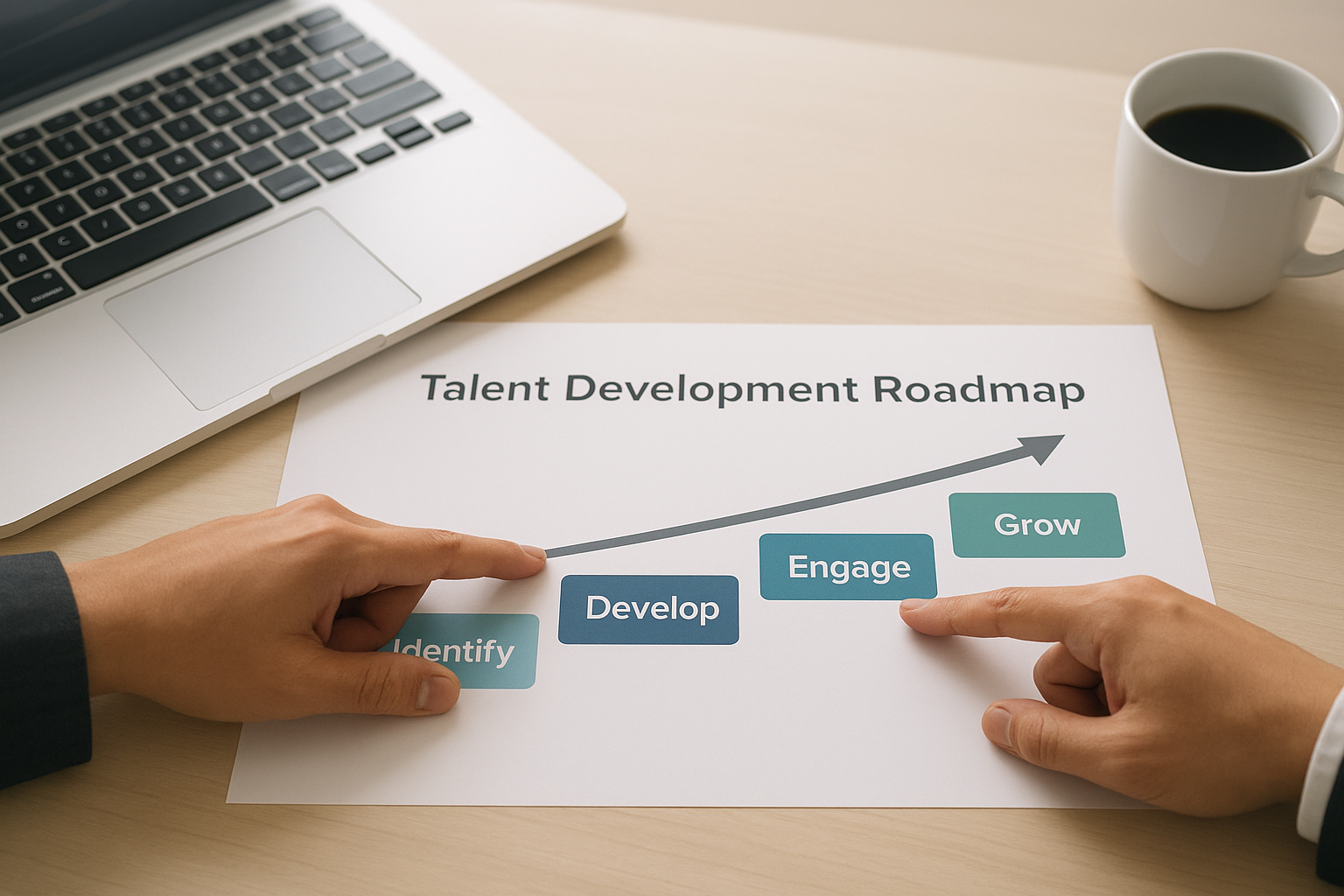
A clear roadmap helps growing teams track progress on hiring and retention goals.
Steps to Build Your Talent Management Strategy
Most successful engagements with talent management consultants follow a similar sequence. Below is the general process most firms use:
- Assess your current talent gaps. Work with your consultant to review hiring bottlenecks, turnover trends, and skill gaps before setting any new goals.
- Define roles and success metrics. Document clear job descriptions and measurable performance expectations so managers and employees know what success looks like.
- Build onboarding and development programs. Create structured onboarding plans and ongoing training paths that help new hires ramp up quickly.
- Create retention and succession plans. Identify high-potential employees and build career paths and backup plans for key leadership positions.
- Measure and adjust regularly. Track turnover, engagement, and time-to-hire metrics quarterly, then adjust your strategy based on what the data shows.
Budgeting for Outside HR Expertise
Pricing for talent management consultants varies based on scope. A single project, like building an employee handbook, might cost a few thousand dollars, while ongoing fractional support often runs several thousand dollars a month.
Consequently, most firms offer tiered pricing so you only pay for the level of support you need. For context, the U.S. Bureau of Labor Statistics reports that turnover and vacancy costs continue climbing year over year, which makes proactive investment in talent strategy increasingly worthwhile.
Common Hiring Mistakes to Avoid
Many companies choose a consultant based on price alone, then discover the fit is wrong halfway through the engagement. Instead, define your goals clearly upfront and check references from businesses similar to yours in size and industry.
Furthermore, avoid firms that only focus on talent acquisition management if your real problem is retention or compliance. A good partner will tell you honestly whether their services match your actual needs, even if that means recommending someone else.

Choosing the right talent management consultants often comes down to trust and fit.
Frequently Asked Questions About Talent Management Consultants
What are talent management consultants?
Talent management consultants are HR professionals who help organizations recruit, develop, and retain employees through customized strategies and systems. They typically work on a project or fractional basis rather than as full-time staff.
How do talent management consultants differ from recruiters?
Recruiters focus mainly on filling open positions, while talent management consultants take a broader view that includes onboarding, performance management, and retention. Many firms offer both services under one roof.
When should a small business hire talent management consultants?
Most businesses benefit from outside talent management support once they pass 15 to 20 employees and start struggling with turnover, inconsistent hiring, or compliance gaps. Waiting too long often leads to costly mistakes.
How much do talent management consultants typically cost?
Costs vary widely based on scope, ranging from a few thousand dollars for a one-time project to several thousand dollars monthly for ongoing fractional support. Most firms offer tiered pricing based on company size and needs.
What industries benefit most from talent management consulting?
Talent management consulting helps almost any growing industry, but it is especially valuable in human services, tech, manufacturing, and professional services, where turnover and compliance risks run high.
Can talent management consultants help with employee retention?
Yes, retention is often a core focus. Consultants build engagement surveys, career development paths, and manager training programs designed to keep top performers from leaving.
What is the difference between talent management and talent acquisition?
Talent acquisition focuses specifically on sourcing and hiring new employees, while talent management covers the entire employee lifecycle after hire. Understanding what talent acquisition really means helps clarify where one function ends and the other begins.
How long does a typical talent management consulting engagement last?
Engagements range from a few weeks for a single project, like building an employee handbook, to ongoing multi-year partnerships for full HR support. Most start with a 90-day assessment period.
Do talent management consultants replace an HR department?
Not necessarily. Many companies use consultants to supplement a small internal HR team or office manager rather than replace them entirely, filling in strategic gaps.
What qualifications should I look for in a talent management consultant?
Look for relevant certifications like SHRM-CP or SHRM-SCP, industry-specific experience, and a track record of measurable results with companies similar in size to yours.
What are common mistakes companies make when hiring talent management consultants?
Common mistakes include hiring based on price alone, skipping reference checks, and failing to define clear goals before the engagement starts. Clear expectations upfront prevent most problems.
How do talent management consultants measure success?
Success is typically measured through metrics like time-to-hire, turnover rate, employee engagement scores, and internal promotion rates. Good consultants set baseline metrics before starting any project.
Final Thoughts on Talent Management Consultants
Talent management consultants give growing companies access to senior-level HR strategy without the cost of a full internal department. From onboarding and performance management to retention and succession planning, the right partner spots problems before they become expensive mistakes. As a result, leaders spend less time firefighting HR issues and more time growing their business.
Ultimately, the best talent management consultants act like an extension of your team, not an outside vendor. If you are ready to explore what proactive HR support looks like for your company, visit Soteria HR to learn how a tailored approach can help you build a stronger, more resilient team.