A web based hr system is cloud-hosted software that lets growing companies manage payroll, benefits, compliance, and employee records from any device with an internet connection. For small and mid-size businesses juggling spreadsheets, paper files, and scattered email threads, this shift often marks the difference between reactive HR firefighting and proactive people management. In fact, once a team scales past a handful of employees, manual processes tend to break down — mistakes creep in, deadlines slip, and compliance risk grows. This guide walks through what a web based hr system actually does, which features matter most, and how to choose one that fits your stage of growth. Along the way, we’ll point to trusted resources and show where expert HR support, like Soteria HR, can make the technology work even harder for your team.

A growing team reviewing employee data inside a web based hr system dashboard.
What Is a Web Based HR System?
A web based hr system is HR software hosted in the cloud rather than installed on a local server, giving administrators and employees secure access through a standard web browser. It centralizes core people functions — payroll, time tracking, benefits enrollment, and compliance documentation — into one platform reachable from a laptop, tablet, or phone. Because the vendor maintains the infrastructure, updates and security patches happen automatically, which lifts a major burden off lean internal teams.
Unlike older, server-based HR software, a cloud-based HR software platform doesn’t require dedicated IT staff to install patches or manage hardware. Instead, the provider pushes updates on a regular schedule, so businesses always run the current version. As a result, even a five-person operations team can manage HR technology that used to require a specialized department. According to Wikipedia’s overview of human resource management systems, these platforms have evolved from simple payroll tools into comprehensive systems covering the full employee lifecycle.
Why Growing Businesses Are Moving to Cloud-Based HR Software
Growth exposes gaps fast. As headcount climbs past ten or fifteen employees, spreadsheets stop scaling, and compliance tracking becomes nearly impossible to manage by memory alone. Therefore, many founders and operations leaders turn to cloud-based HR software as soon as the administrative load starts eating into strategic time.
The U.S. Bureau of Labor Statistics projects that employment of human resources specialists will keep growing faster than the average for all occupations over the next decade, reflecting rising demand for structured HR support as companies scale (BLS Occupational Outlook Handbook). Consequently, businesses that can’t yet justify a full internal HR department often rely on technology plus outside expertise to fill the gap. Our complete guide to cloud-based HR management breaks this transition down in more detail.
Core Features of a Strong Online HR Platform
Not every online HR management system is built the same way, so it helps to know what separates a genuinely useful platform from a flashy one. Above all, look for these capabilities:
- Centralized employee records — one secure location for contracts, reviews, and personal information.
- Payroll coordination — accurate, on-time processing synced with time and attendance data.
- Benefits administration — self-service enrollment and automatic eligibility tracking.
- Compliance alerts — automatic flags for policy or regulatory changes by state.
- Reporting dashboards — real-time visibility into turnover, headcount, and labor costs.
For a deeper look at which specific tools support each HR function, see our breakdown of tools that assist with HR administration.
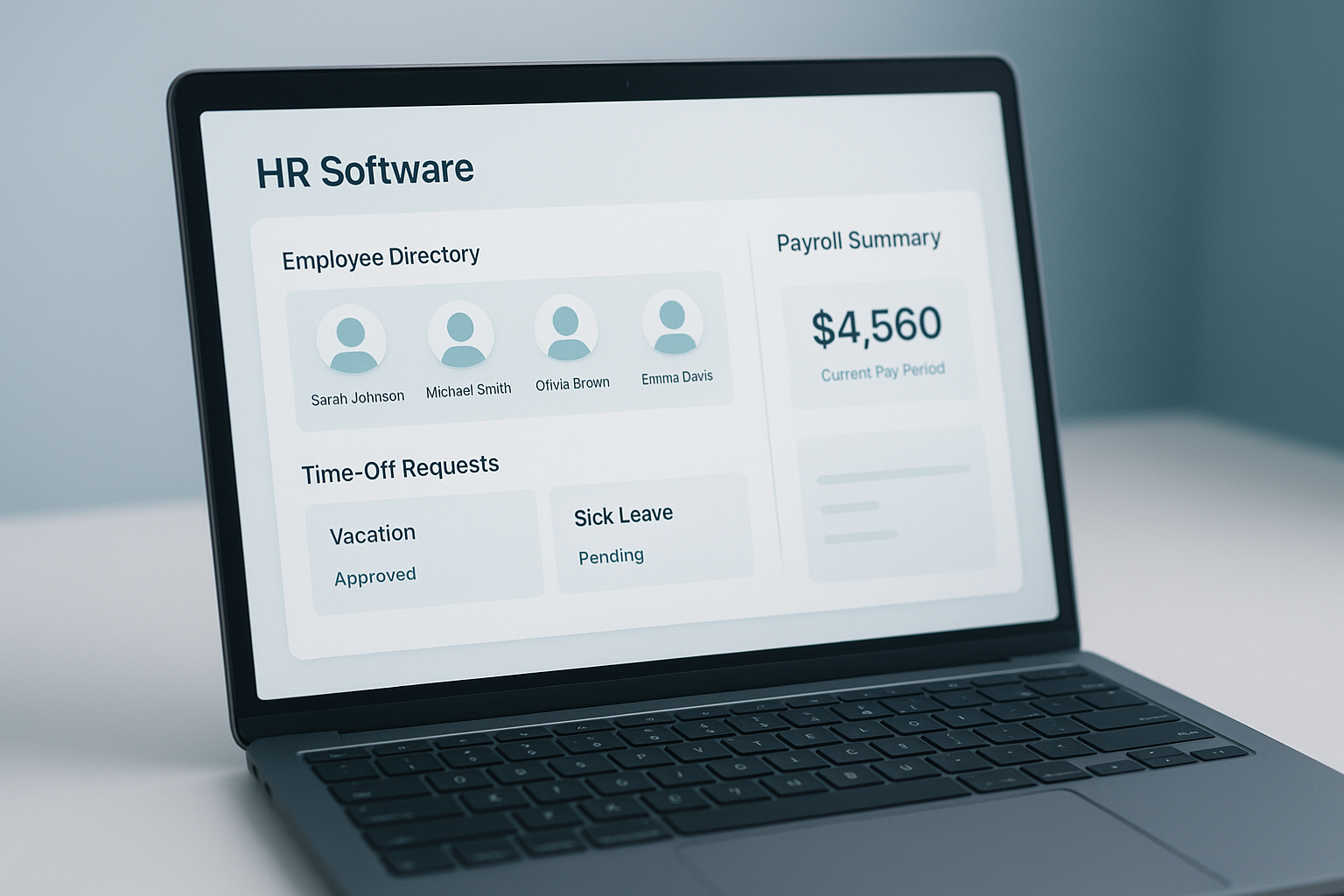
Core modules commonly found inside a modern online HR platform.
Web Based HR System vs. Traditional HR Methods
Traditional HR methods rely on paper files, disconnected spreadsheets, and manual calculations, which naturally invite errors as a company grows. In contrast, a web based hr system automates repetitive tasks, standardizes recordkeeping, and reduces the time spent reconciling data across tools.
Consider onboarding, for example. With traditional methods, a new hire might fill out paper forms that get manually entered into payroll, benefits, and compliance tracking systems separately. However, a web based hr system often lets that same information flow automatically into every connected module, cutting setup time from hours to minutes. Similarly, compliance updates that once required manually monitoring state and federal bulletins can now trigger automatic alerts inside the platform.
How to Choose and Implement a Digital HR Platform
Selecting a digital HR platform shouldn’t be rushed, since switching systems later is disruptive and costly. Instead, follow a structured process:
- Assess your current HR pain points by identifying exactly where manual processes break down, such as payroll errors, missed compliance deadlines, or scattered employee records.
- Define your must-have features, listing core capabilities like payroll coordination, benefits management, time tracking, and compliance monitoring based on your headcount and industry.
- Compare at least three vendors and request live demos, paying close attention to ease of use, integration options, support quality, and transparent pricing.
- Plan your data migration and training by mapping how existing employee records will transfer and scheduling hands-on sessions for managers and staff.
- Launch in phases, gather employee feedback, and refine workflows during the first ninety days to resolve any friction points.
Many small businesses find it helpful to review platform options alongside real-world guidance, such as our comparison of HRMS software solutions for small to mid-size businesses.
Key Benefits for Small and Mid-Size Businesses
The payoff from a well-implemented HR software system usually shows up quickly. For instance, administrative time spent on manual data entry drops, while accuracy in payroll and benefits records improves. Furthermore, leadership gains real-time visibility into workforce trends, which supports faster, better-informed decisions about hiring, retention, and budgeting.
Above all, a web based hr system reduces compliance exposure. Automatic alerts and standardized documentation make it far less likely that a policy update slips through the cracks. For organizations juggling multi-state employees or industry-specific regulations, that protection alone can justify the investment. Our guide to HR management for small business covers additional advantages in more depth.
Common Mistakes to Avoid When Adopting HR Software
Even a great platform can underperform if the rollout is mishandled. The most common mistake is skipping employee training, which leaves staff confused and reliant on workarounds. Similarly, migrating incomplete or outdated data creates errors that follow the company for months.
Another frequent misstep is choosing a system with far more complexity than the business actually needs, which drives up cost without adding value. In addition, companies sometimes treat software as a complete replacement for human judgment, overlooking the fact that technology can’t interpret nuanced employee relations issues or evolving labor law on its own. According to SHRM, organizations that pair HR technology with experienced guidance tend to see stronger adoption and fewer compliance gaps than those relying on software alone.
How Soteria HR Helps You Maximize Your HR System
Software handles the mechanics, but it doesn’t replace strategic HR judgment. That’s where Soteria HR comes in. As an outsourced HR partner for growing organizations with 10 to 250 employees, Soteria pairs hands-on administration, compliance monitoring, and benefits management with the technology recommendations that fit your specific stage of growth.
Whether you’re building a custom HR playbook, updating an employee handbook, or trying to decide which platform makes sense for a multi-state workforce, Soteria’s team works alongside you rather than handing you a login and walking away. This is especially valuable during periods of rapid growth, as outlined in our article on how professional HR administration supports companies during rapid growth. If your current setup feels more like red tape than support, it may be time to talk to an HR expert at Soteria HR.

Pairing a web based hr system with expert HR guidance strengthens compliance and employee experience.
Frequently Asked Questions About Web Based HR Systems
What is a web based hr system?
A web based hr system is HR software hosted in the cloud that lets businesses manage payroll, benefits, compliance, and employee records through a browser rather than an installed program. It gives teams secure, anytime access from any device with an internet connection.
How does a web based hr system work?
A web based hr system stores employee data and HR workflows on a vendor’s secure servers, and users log in through a browser or mobile app to complete tasks. The provider handles maintenance, updates, and data backups automatically.
How much does a web based hr system cost?
Pricing typically ranges from a few dollars to around twenty dollars per employee per month, depending on the features included, such as payroll, benefits administration, or compliance tools. Larger platforms with advanced analytics or dedicated support often cost more.
What is the difference between a web based hr system and on-premise HR software?
On-premise HR software is installed on a company’s own servers and requires internal IT support for updates and security. A web based hr system, by contrast, is hosted by the vendor, so updates happen automatically and employees can access it remotely.
How long does it take to implement a web based hr system?
Most small and mid-size businesses can implement a web based hr system in four to eight weeks, depending on data complexity and the number of integrations needed. Simple setups with minimal historical data migration can go live faster.
What features should small businesses prioritize in an HR system?
Small businesses should prioritize payroll coordination, benefits enrollment, compliance alerts, and centralized employee records above all else. Additional features like performance tracking or recruiting tools are valuable but less urgent in the early stages.
What mistakes do companies make when switching to a web based hr system?
Common mistakes include skipping employee training, migrating incomplete or inaccurate data, and choosing a platform with more complexity than the team actually needs. Rushing the rollout without a feedback period is another frequent misstep.
Is a web based hr system secure?
Reputable web based hr system providers use encryption, role-based access controls, and regular security audits to protect sensitive employee data. Businesses should still verify a vendor’s compliance certifications before signing a contract.
Does a small business really need a web based hr system?
Once a company grows past roughly ten to fifteen employees, manual spreadsheets and paper files often become error-prone and time-consuming. A web based hr system reduces that administrative burden and lowers the risk of compliance mistakes.
Can a web based hr system integrate with payroll providers?
Most modern platforms offer native integrations or API connections with popular payroll providers, which keeps employee data synced across systems. This reduces duplicate data entry and lowers the chance of payroll errors.
Do I still need an HR professional if I have a web based hr system?
Yes, software automates administrative tasks, but it cannot replace strategic judgment on employee relations, compliance interpretation, or workplace culture. Many growing companies pair their HR system with outsourced HR expertise for that reason.
What are the main benefits of a web based hr system for growing companies?
Key benefits include centralized employee records, fewer compliance errors, faster onboarding, and real-time visibility into workforce data. As a result, leadership teams can make faster, better-informed people decisions.
Can a web based hr system support multi-state employers?
Many platforms include compliance tracking that flags state-specific requirements, which helps multi-state employers stay current on varying labor laws. However, businesses with complex multi-state obligations often still benefit from expert HR guidance alongside the software.
Final Thoughts on Choosing the Right HR System
Choosing a web based hr system is one of the most practical steps a growing business can take to reduce administrative strain and compliance risk. However, the right platform works best when paired with experienced HR guidance that knows how to configure it for your specific industry and growth stage. Soteria HR helps small and mid-size companies select, implement, and get the most from their HR technology, all while providing the human judgment software can’t replicate. If your team is ready to stop firefighting HR admin and start building a stronger foundation, talk to an HR expert at Soteria HR today.