
HR solutions for mid-sized businesses is the term used to describe the mix of HR administration, HR consulting, and benefits administration that helps growing companies manage daily people operations without building a full internal department. As a company grows past a handful of employees, the HR workload multiplies quickly. Onboarding, leave tracking, payroll coordination, and benefits enrollment all demand more structure than one generalist can reasonably handle. For founders, CEOs, and operations leaders, finding the right mix of support becomes essential to staying compliant and competitive. This guide explains what HR solutions for mid-sized businesses actually include, how they compare to in-house teams, and what steps to take before choosing a partner.
Quick answer: HR solutions for mid-sized businesses typically combine outsourced administration, compliance guidance, and benefits support—often through an ASO model—so leadership can focus on growth instead of paperwork.
What Are HR Solutions for Mid-Sized Businesses?
HR solutions for mid-sized businesses generally mean outsourced or hybrid support—covering administration, consulting, and benefits—that scales with a company’s headcount and complexity. In practice, a dedicated HR partner handles routine administration, such as records, onboarding, and leave, while also advising leadership on policy and workforce planning.
Specifically, mid-sized employers, generally those with roughly 10 to 250 employees, often fall into a gap. They are too complex for a single HR generalist, yet not large enough to justify a full internal department with specialists in benefits, compliance, and recruiting. Consequently, many turn to an Administrative Services Organization (ASO) model, which provides tailored HR support while the client remains the employer of record and keeps responsibility for employment decisions. Unlike a PEO, an ASO arrangement does not involve co-employment, which some leaders prefer for control reasons. For a closer look at providers, see this comparison of best HR outsourcing services.

Choosing the right HR solutions for mid-sized businesses often starts with a candid conversation about priorities.
Why Mid-Sized Companies Need Stronger HR Support
Mid-sized businesses often outgrow informal HR processes faster than leadership expects. As a company moves from 20 employees toward 100 or more, HR complexity does not grow at a steady pace. It tends to jump sharply once benefits plans, multiple locations, or specialized roles enter the picture.
According to SHRM research, HR staffing ratios vary widely by company size, and many smaller and mid-sized organizations operate with far less dedicated HR support per employee than larger enterprises. This gap can leave founders and operations leaders handling HR tasks between other responsibilities, which raises the risk of compliance gaps in areas like wage and hour rules, leave tracking, and benefits administration.
In addition, employees at growing companies expect structured onboarding, clear policies, and responsive HR support. These expectations are hard to meet without dedicated resources. Therefore, many organizations without a full HR department look to outsourced HR support to close this gap quickly, without the time and cost of building an internal team from scratch. Similarly, companies that already have an internal HR person often bring in outside support to extend capacity rather than replace it.
Core HR Services Mid-Sized Businesses Should Prioritize
Not every mid-sized business needs every HR service at once. However, four areas consistently matter most as headcount grows: administration, consulting, benefits, and payroll coordination. Below is a closer look at each.
HR Administration
HR administration covers the daily operational work: employee records, onboarding and offboarding, policy management, leave coordination, unemployment support, and payroll coordination. This is the foundation most mid-sized businesses outsource first, since it carries the heaviest workload and the most compliance exposure. For a deeper explanation, read more on what HR administration really means for SMBs.
HR Consulting
HR consulting provides practical advice on employee relations, workforce planning, culture, recruiting practices, and performance management. Rather than simply executing tasks, consultants help leaders turn priorities into workable processes, which matters most when a company is scaling leadership or adding new departments.
Benefits Administration
Benefits administration includes enrollments, terminations, employee communications, and carrier coordination, along with support for applicable ACA, COBRA, and Section 125 requirements and Form 5500 filings, where applicable. Because benefits rules change and carry real financial risk, this is an area where small administrative errors can become costly compliance problems.
Payroll Coordination and Employee Training
Payroll coordination involves reviewing workflows and working with external payroll providers to improve information flow and resolve issues faster. Meanwhile, employee and manager training, including harassment-prevention training, rounds out a well-balanced HR solution for a growing workforce.
In-House HR vs Outsourced HR Solutions: Which Fits Your Business?
Many leaders assume the choice is either-or. In practice, outsourced HR solutions often complement an existing internal team rather than replace it. The table below outlines common differences.
| Factor | In-House HR Team | Outsourced HR Solutions |
|---|---|---|
| Startup cost | Higher, requires hiring and training specialists | Lower, scales with agreed scope of services |
| Compliance coverage | Depends on individual staff expertise | Supported by a team tracking multiple jurisdictions |
| Employer of record | Company | Company remains employer under an ASO model |
| Flexibility | Fixed headcount, harder to scale quickly | Support can expand or contract with needs |
If you are weighing providers, this breakdown of outsourced HR partners for mid-sized companies digs deeper into what tailored support can look like in practice.
How to Choose the Right HR Outsourcing Partner
Selecting an HR partner is easier when broken into clear steps. Follow this sequence before signing any agreement.
- Assess your current HR gaps. Complete a short HR health check or internal audit to identify where administration, compliance, or benefits support is weakest.
- Define your priority service areas. Decide whether you need help primarily with administration, benefits, consulting, or a combination before requesting proposals.
- Compare ASO and PEO models. Review which structure better fits your preference for retaining employer-of-record status and control over employment decisions.
- Check compliance expertise and jurisdiction knowledge. Ask how prospective partners track requirements relevant to your locations, since rules differ across states like California.
- Schedule a consultation and set expectations. Talk with an HR expert to outline scope, pricing, and timelines before signing an agreement.
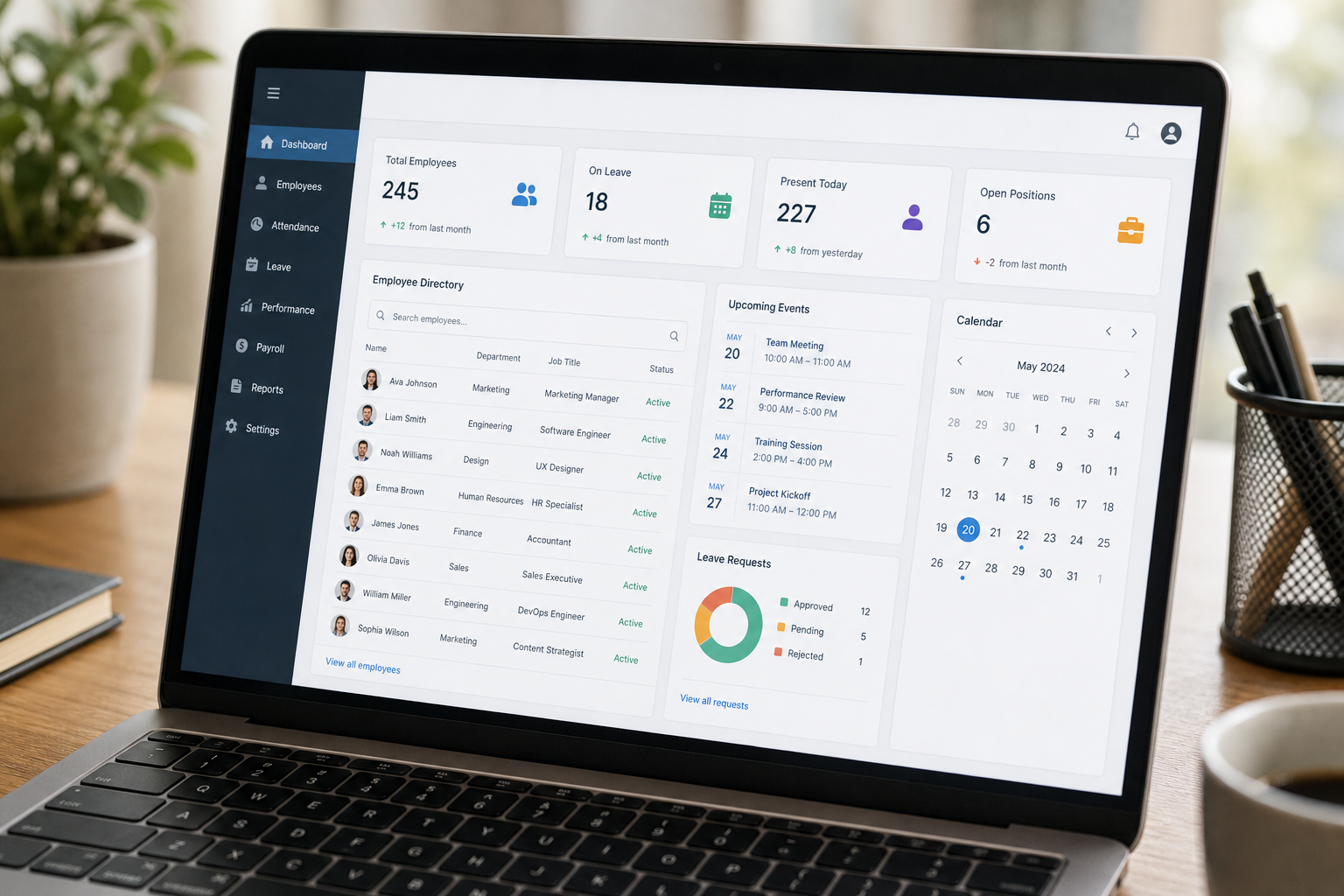
Many HR solutions for mid-sized businesses pair human support with simple digital tools for records and tracking.
Signs It’s Time to Upgrade Your HR Management Solutions
Several warning signs suggest current HR management solutions are no longer keeping pace with company growth. Common indicators include missed compliance deadlines, inconsistent onboarding, rising employee complaints, and leadership spending excessive time on paperwork instead of strategy.
If any of these sound familiar, a short self-assessment can help clarify priorities before a conversation with a provider. Soteria HR offers a free HR Health Assessment at soteriahr.ai, with a 10-question Quick HR Check that takes about two minutes and a more detailed 40-question version for a fuller picture. Results are self-reported and preliminary, not a certification of compliance.
For companies exploring software alongside human support, this overview of HRMS software solutions for small to medium-size businesses compares common digital tools. You can also learn how to find the right HR support fast if time is a factor. Visit soteriahr.com to review Soteria HR’s full service scope directly.

Training and performance support round out HR solutions for mid-sized businesses once core administration is stable.
Frequently Asked Questions About HR Solutions for Mid-Sized Businesses
What are HR solutions for mid-sized businesses?
HR solutions for mid-sized businesses are outsourced or hybrid services, such as HR administration, consulting, and benefits administration, that help growing companies manage HR operations and compliance without a full internal department.
How is outsourced HR different from having an in-house HR team?
Outsourced HR provides dedicated specialists and established processes through a partner firm, while an in-house team is hired directly by the company. Many mid-sized businesses blend both approaches.
How much do HR solutions for mid-sized businesses typically cost?
Pricing varies based on company size, services selected, and scope of support, so there is no single flat rate. Most providers quote based on employee count and the services needed.
How long does it take to set up outsourced HR support?
Implementation timelines vary, but many engagements begin with an assessment before transitioning records, policies, and processes over several weeks. Complex benefits cleanup can extend this timeline.
What is the difference between an ASO and a PEO?
An Administrative Services Organization (ASO) provides HR support while the client remains the employer of record, with no co-employment. A PEO typically involves co-employment and shared employer responsibilities.
Which HR tasks should mid-sized businesses outsource first?
Many companies start with HR administration and benefits administration, since these carry the most day-to-day workload and compliance risk. HR consulting often follows once administration is stable.
What common HR mistakes do growing companies make?
Common mistakes include outdated employee handbooks, inconsistent leave tracking, worker misclassification, and delayed benefits compliance tasks. These gaps often surface only after a complaint or audit.
Why does benefits administration matter for mid-sized employers?
Benefits administration keeps enrollments, terminations, and carrier communications accurate while supporting compliance with rules like COBRA, Section 125, and ACA reporting. Errors here can create real financial exposure.
Can outsourced HR solutions help with compliance?
Yes, outsourced HR partners track changing federal and state requirements and help apply them to policies and benefits administration. The client remains responsible for final employment decisions and obligations, consistent with guidance from agencies like the U.S. Department of Labor.
What size company benefits most from HR outsourcing?
Organizations with roughly 10 to 250 employees are a common priority segment, since they often outgrow informal HR but are not yet ready for a full internal department. This is a guideline, not a strict cutoff.
How do I know if my business needs better HR solutions?
Signs include missed compliance deadlines, inconsistent onboarding, rising employee complaints, or leadership spending excessive time on HR paperwork. A short self-assessment can help clarify priorities.
What should I look for in an HR solutions provider?
Look for experience with companies your size, clear service scope, familiarity with your state’s employment laws, and a model, like ASO, that fits your preference for control over employment decisions.
Final Thoughts
Ultimately, HR solutions for mid-sized businesses work best when they match a company’s actual stage of growth, not a generic package. Start with administration and benefits, add consulting as leadership needs grow, and choose a model like ASO if retaining employer control matters to your organization. Above all, the right partner should feel like an extension of your team rather than a vendor relationship.
If you are ready to discuss HR solutions for mid-sized businesses with a qualified team, call Soteria HR at (800) 399-2458 or submit a consultation request to talk to an HR expert. You can also start with the free HR Health Assessment at soteriahr.ai to identify priorities before that conversation.