
An HR consulting contract is a formal written agreement between your business and an HR consultant or firm that defines the services to be provided, the fees involved, and the rules that govern the relationship. In short, it is the document that keeps everyone honest — and protected.
Many growing businesses bring on HR support without fully understanding what they are signing. That is a costly mistake. A poorly written contract can leave you overpaying for services you did not need, losing ownership of HR documents you paid to create, or locked into a relationship that no longer fits. However, a well-structured agreement sets the stage for a productive, low-drama partnership.
This guide walks you through everything you need to know — from the core components of an HR consulting contract to the red flags that should make you pause before signing.

Reviewing an HR consulting contract carefully before signing protects your business and sets clear expectations.
What Is an HR Consulting Contract?
An HR consulting contract is a legally binding document. Once both parties sign it, it is enforceable under standard contract law. According to the Society for Human Resource Management (SHRM), clearly defined service agreements are one of the most important risk-reduction tools a business can use when engaging outside HR support.
The contract typically covers the scope of services, payment terms, confidentiality obligations, intellectual property ownership, and how either party can end the relationship. Furthermore, it often addresses liability limitations and dispute resolution procedures so that disagreements do not automatically escalate to litigation.
Think of it this way: the contract is not a sign of distrust. Instead, it is the foundation of a professional relationship that benefits both sides.
Why Your Business Needs One (Even for Short Engagements)
Many small business owners assume a contract is only necessary for long-term or high-value engagements. That assumption is wrong. Even a short project — such as a compliance audit or employee handbook update — should be governed by a written agreement.
Consider the stakes. HR consultants routinely access payroll data, disciplinary records, and sensitive employee information. Without a confidentiality clause in place, there is no legal obligation for that information to remain private. Similarly, if you pay a consultant to build a custom HR playbook and the contract does not specify ownership, you may not legally own what you paid for.
According to the U.S. Department of Labor, misclassification of workers and ambiguous service agreements are among the most common sources of employment-related disputes. A solid contract eliminates most of that ambiguity before it becomes a problem.
Core Components of a Strong HR Services Agreement
A well-drafted HR services agreement should include the following essential elements. Each one serves a specific protective purpose.
1. Scope of Work
This is the most important section. It should list every service the consultant will provide, the expected deliverables, and — just as importantly — what is not included. A vague scope of work is the number one cause of billing disputes and unmet expectations.
2. Payment Terms
Specify the fee structure (hourly rate, flat project fee, or monthly retainer), the invoicing schedule, accepted payment methods, and any late payment penalties. Transparency here prevents awkward conversations later.
3. Confidentiality and Data Protection
A mutual non-disclosure agreement (NDA) protects both parties. Your business data and employee records stay private. The consultant’s proprietary methods and tools stay protected too. This clause is non-negotiable.
4. Intellectual Property Ownership
Any HR documents, policies, or playbooks created during the engagement should transfer to you upon full payment. Without this clause, the consultant may retain ownership of materials you commissioned and paid for.
5. Termination and Notice Period
Both parties should be able to exit the agreement with reasonable written notice — typically 30 to 60 days. Check for auto-renewal clauses and early termination fees, which can trap businesses in agreements that no longer serve them.
6. Dispute Resolution
Specify how disagreements will be handled — typically through mediation or arbitration before either party can pursue litigation. This saves both sides significant time and legal fees if a conflict arises.
How to Structure Your HR Consulting Agreement Step by Step
Building a solid agreement does not have to be complicated. Follow these steps to cover all the bases.
- Define the scope of work in detail. List every service, deliverable, and timeline. Explicitly exclude anything outside the agreement to prevent scope creep.
- Establish clear payment terms. Confirm the fee structure, invoicing cadence, and any expense reimbursement policies before work begins.
- Add confidentiality and data protection clauses. Protect employee data and business information with a mutual NDA that applies during and after the engagement.
- Clarify intellectual property ownership. State that all deliverables transfer to you upon full payment, with no retained rights by the consultant.
- Include termination and dispute resolution terms. Set a fair notice period, address early termination fees, and establish a mediation-first process for resolving disagreements.
Project-Based vs. Retainer: Which Contract Structure Fits You?
There are two primary structures for an HR consultant scope of work arrangement. Understanding the difference helps you choose the right fit for your business stage.
Project-based contracts are ideal for specific, time-limited needs — such as building an employee handbook, running a compliance audit, or supporting a single hire. The scope is fixed, the deliverables are defined, and the engagement ends when the project is complete.
Retainer contracts provide ongoing access to HR expertise for a fixed monthly fee. This structure works well for growing companies that need consistent HR support but are not ready to hire a full-time HR leader. Monthly retainer arrangements typically range from $1,500 to $10,000 or more, depending on the scope and size of the organization.
For most small to mid-sized businesses, a retainer model delivers more value over time. It gives you a consistent partner who understands your business — rather than a revolving door of project-by-project consultants. Learn more about the strategic benefits of ongoing support through Soteria HR’s strategy consulting services.
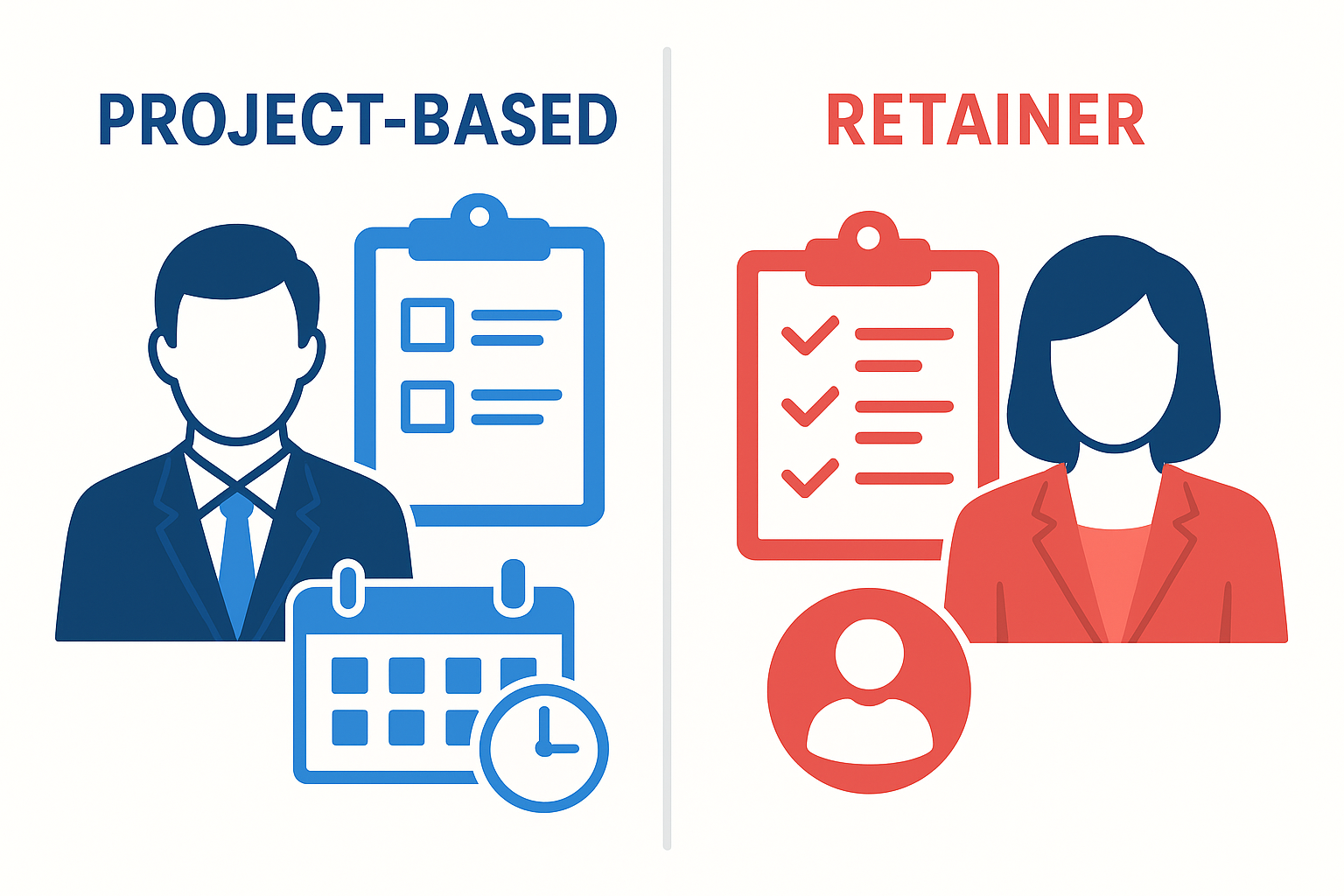
Choosing the right contract structure depends on whether your HR needs are project-specific or ongoing.
Red Flags to Watch for Before You Sign
Not every HR consulting contract is created equal. Watch for these warning signs before you put pen to paper.
- Vague scope of work. If the deliverables are not specific, you have no leverage when expectations are not met.
- No IP ownership clause. Without it, you may not own the handbook, policies, or tools you paid to create.
- Auto-renewal without notice. Some contracts renew automatically unless you cancel within a narrow window. Read the fine print.
- No termination clause. You should always have a clear, reasonable exit path.
- Unlimited liability on your end. Liability should be mutual and capped at a reasonable amount.
Additionally, always verify the consultant’s credentials and references before signing. A reputable HR partner will welcome that due diligence. For a deeper look at what strong HR consulting looks like in practice, explore what HR consulting actually involves and how it differs from traditional in-house HR.
What Soteria HR Includes in Every Engagement
At Soteria HR, every client engagement is backed by a transparent, plain-language agreement that covers all the elements above. There are no hidden fees, no ambiguous scopes, and no auto-renewing traps. Clients receive a clear outline of services — from compliance and risk management to benefits coordination and custom HR playbooks — so they always know exactly what they are getting.
Furthermore, because Soteria works exclusively with growing SMBs (typically 10 to 250 employees), the firm understands the specific pressures that come with scaling a team. That context shapes every contract and every engagement. You can explore the full range of HR and consulting solutions at Soteria’s human resources and consulting page.
How HR Consulting Contracts Protect Compliance
Compliance is not optional. The U.S. Equal Employment Opportunity Commission (EEOC) reports that workplace discrimination charges cost employers billions of dollars annually in settlements and legal fees. A well-structured HR consulting agreement helps ensure that the consultant you hire is accountable for delivering compliance-aligned services.
Specifically, your contract should address what happens if the consultant’s advice leads to a compliance failure. Liability clauses and indemnification provisions are therefore critical — not optional extras. If a consultant resists including these, that itself is a red flag.
For businesses navigating complex HR compliance landscapes, having a dedicated partner — not just a one-off advisor — makes a significant difference. Learn how human capital management consulting can provide that ongoing layer of protection and strategic guidance.
Frequently Asked Questions About HR Consulting Contracts
What is an HR consulting contract?
An HR consulting contract is a formal written agreement between a business and an HR consultant or firm that defines the scope of services, fees, timelines, confidentiality obligations, and termination terms. It protects both parties and sets clear expectations from day one.
Why does a small business need an HR consulting contract?
A small business needs an HR consulting contract to protect itself legally, clarify what services it is paying for, and prevent misunderstandings about deliverables or costs. Without a contract, disputes over scope or fees can become expensive and time-consuming.
What should be included in an HR consulting contract?
An HR consulting contract should include a clear scope of work, payment terms, confidentiality clauses, intellectual property ownership, termination provisions, and dispute resolution procedures. It should also specify who owns any HR documents, playbooks, or policies created during the engagement.
How much does an HR consulting contract typically cost?
Costs vary widely depending on the scope of services and organization size. Hourly rates for HR consultants in the U.S. typically range from $75 to $250 per hour, while monthly retainer arrangements can range from $1,500 to $10,000 or more.
What is the difference between a project-based and a retainer HR consulting contract?
A project-based contract covers a specific, time-limited engagement. A retainer contract provides ongoing HR support for a fixed monthly fee, giving businesses consistent access to HR expertise throughout the year.
Can I terminate an HR consulting contract early?
Yes, most HR consulting contracts include a termination clause allowing either party to end the agreement with advance written notice, typically 30 to 60 days. Some contracts may include early termination fees, so review those terms carefully before signing.
Who owns the HR documents created during a consulting engagement?
Ownership of deliverables should be explicitly stated in the contract. Typically, once the client pays in full, ownership transfers to the client — but this must be clearly written into the intellectual property clause.
What is a confidentiality clause in an HR consulting contract?
A confidentiality clause (also called an NDA) requires both parties to keep sensitive business and employee information private. This is especially critical in HR because consultants often access payroll data, disciplinary records, and other confidential employee information.
What common mistakes should businesses avoid when signing an HR consulting contract?
Common mistakes include signing a contract with a vague scope of work, failing to clarify deliverable ownership, overlooking auto-renewal clauses, and not verifying the consultant’s credentials. Always have a legal professional review the contract before signing.
Is an HR consulting contract legally binding?
Yes, an HR consulting contract is legally binding once both parties have signed it. It is enforceable under standard contract law and can be used as evidence in a dispute. Ensure all terms are clearly written and mutually agreed upon before execution.
How long should an HR consulting contract last?
Contract length depends on the engagement type. Project-based contracts last for the duration of a specific project. Retainer agreements are commonly structured as 6-month or 12-month terms with renewal options built in.
What is a scope of work in an HR consulting contract?
A scope of work is a detailed section of the contract that outlines exactly what services the HR consultant will provide, the expected deliverables, timelines, and any limitations. A well-written scope of work prevents scope creep and billing disputes.
Conclusion: Get the Contract Right Before the Work Begins
A strong HR consulting contract is not bureaucratic red tape — it is the foundation of a productive, professional relationship. It protects your business, clarifies expectations, and ensures you get exactly what you pay for. Whether you are engaging an HR consultant for a one-time project or building a long-term outsourced HR partnership, the contract sets the tone for everything that follows.
Take the time to review every clause. Verify ownership of deliverables. Confirm the termination terms. And above all, choose a partner whose contract reflects the same transparency and professionalism they promise in their services.
If you are ready to explore what a clear, no-jargon HR consulting engagement looks like in practice, visit Soteria HR’s HR consulting contract page to learn how we structure our client agreements — and why growing businesses trust us to have their back.