Human capital management consulting is a professional service that helps organizations attract, develop, manage, and retain their people more strategically — turning workforce decisions into a genuine competitive advantage. For growing businesses without a full HR department, it can be the difference between chaotic growth and confident scaling.
In short: your people are your most valuable asset. HCM consulting makes sure you’re treating them that way — and doing it in a way that protects the business, too.
What Is Human Capital Management Consulting?
Human capital management consulting — often abbreviated as HCM consulting — is the practice of advising businesses on how to manage their workforce more effectively. According to Wikipedia’s overview of human capital, the concept treats employees as assets whose value can be grown through investment, training, and smart management.
A direct answer: HCM consulting covers everything from compliance and hiring to performance management and culture-building. Consultants assess where your HR practices stand today, identify gaps, and build tailored solutions that align your people strategy with your business goals.
Unlike traditional HR administration — which tends to be reactive and task-focused — HCM consulting is proactive and strategic. Furthermore, it connects day-to-day HR decisions to long-term business outcomes like revenue growth, employee retention, and organizational resilience.
Why Growing Businesses Need Workforce Strategy Support
Small and mid-sized businesses often hit a wall somewhere between 15 and 50 employees. Suddenly, the informal people management that worked in the early days starts to break down. Compliance becomes complicated. Turnover creeps up. Hiring takes forever. And no one has the bandwidth — or the expertise — to fix it.
According to the Society for Human Resource Management (SHRM), organizations that invest in structured people practices consistently outperform those that don’t — with lower turnover, stronger engagement, and better financial results. In fact, SHRM research suggests that replacing a single employee can cost anywhere from 50% to 200% of that person’s annual salary.
That’s a significant cost. Therefore, bringing in expert guidance isn’t a luxury — it’s a smart business decision.
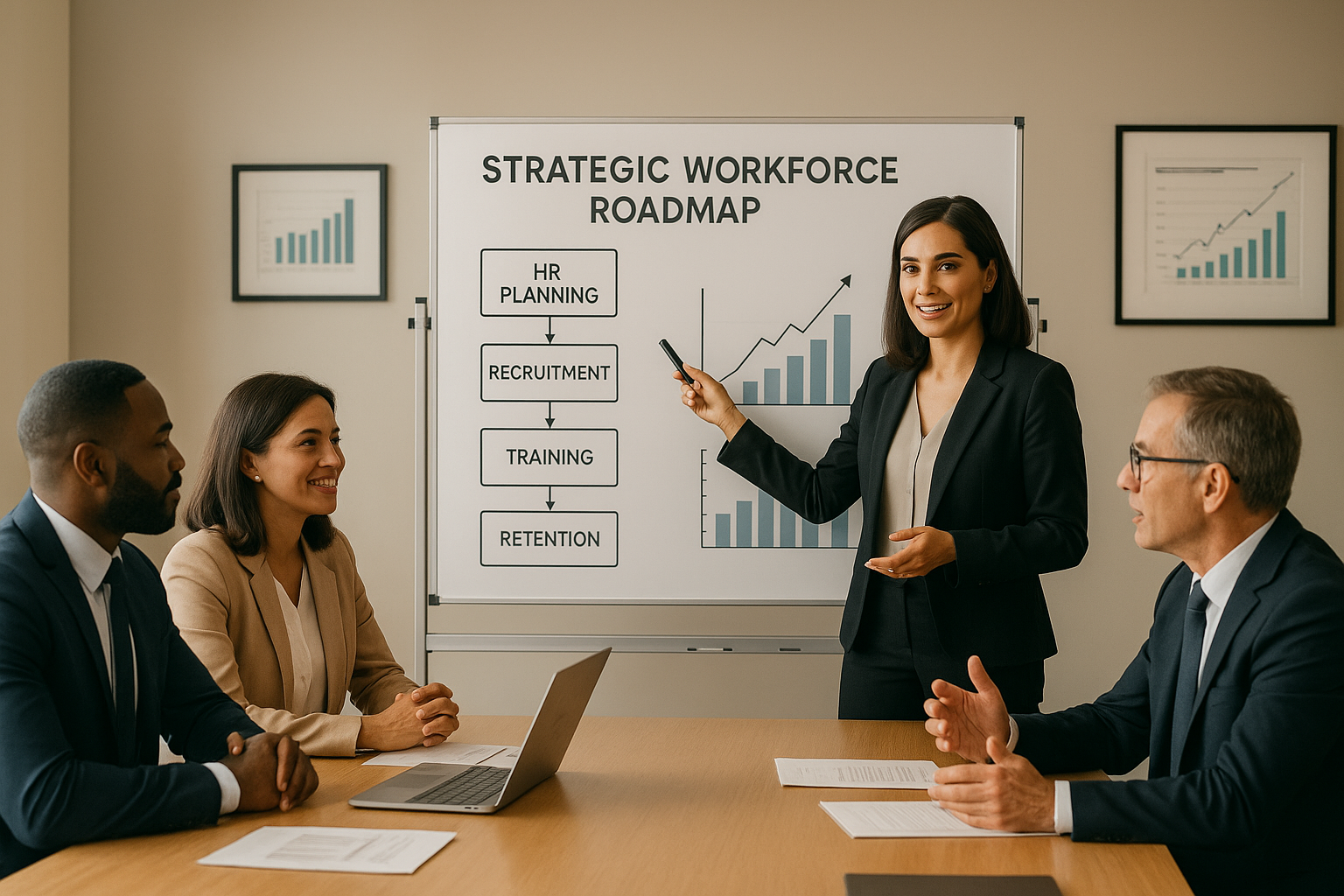
Strategic HCM consulting sessions help leadership teams align people decisions with long-term business goals.
Core Services Included in HCM Consulting
HCM consulting is not a single service — it’s a suite of interconnected solutions. Specifically, the most impactful areas typically include:
- HR Compliance Audits — Reviewing your policies, classifications, and practices against current federal and state law.
- Talent Acquisition Strategy — Building hiring processes that attract the right people faster and reduce costly mis-hires.
- Benefits Design and Management — Creating competitive, cost-effective benefits packages that help you retain top talent.
- Employee Handbook Development — Writing clear, compliant, and culture-aligned policies your team will actually read.
- Performance Management Systems — Designing review processes that motivate employees and support accountability.
- Onboarding Program Design — Building structured first-90-day experiences that reduce early turnover.
- HR Strategy and Planning — Aligning your people roadmap with your business growth plan.
For a deeper look at how these services are structured, explore what human capital management consulting firms typically offer and how to evaluate them.
The Difference Between HCM Consulting and a PEO
A Professional Employer Organization (PEO) co-employs your workforce and processes payroll through their own systems. HCM consultants, by contrast, work within your existing structure — advising, building, and optimizing without taking on employer-of-record responsibilities. Both have their place, but consulting gives you more control and customization.
How to Get Started with People Operations Consulting
Getting started doesn’t have to be overwhelming. In fact, the process is straightforward when broken into clear steps:
- Assess Your Current HR State — Conduct an honest internal audit of your existing policies, compliance status, and people practices. Identify what’s working and what’s broken.
- Define Your Goals and Pain Points — Be specific. Are you struggling with compliance? Losing good people? Hiring too slowly? Clarity here helps you find the right partner faster.
- Evaluate and Select a Consulting Firm — Research firms with experience in your industry. Schedule discovery calls and ask about their approach, pricing model, and measurable results from past clients.
- Onboard Your Consulting Partner — Share your org chart, existing policies, employee data, and business goals. A good consultant will use this to build a tailored HR roadmap aligned to your growth stage.
- Implement, Measure, and Iterate — Execute the strategies, track key metrics like turnover rate and time-to-hire, and refine the approach based on real-world results over time.
Most clients see early wins within 30 to 90 days. Consequently, longer-term strategic outcomes like significantly improved retention typically develop over 6 to 12 months of consistent work.
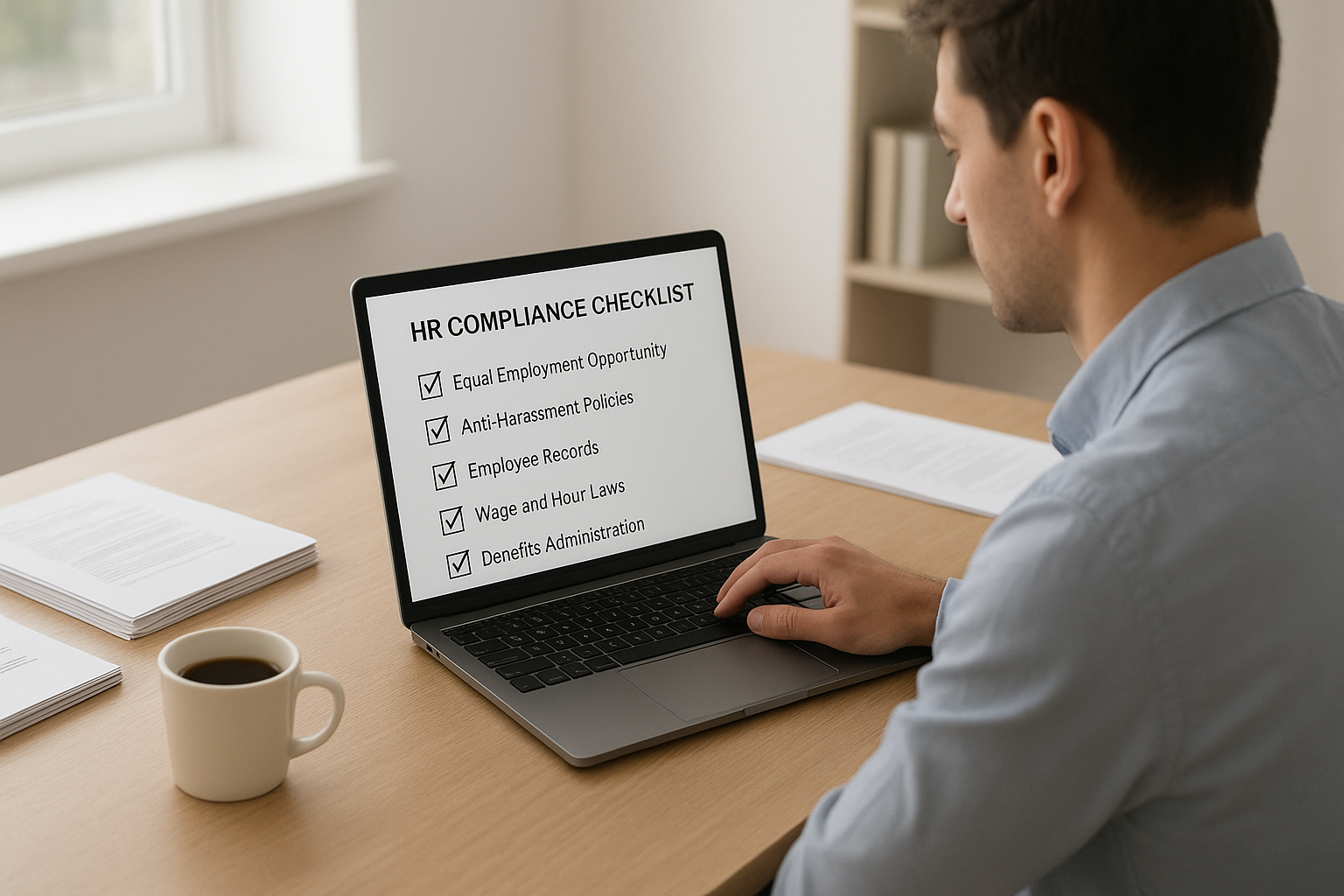
Reviewing your compliance posture is a critical first step in any effective human capital management consulting engagement.
What Strong HR Strategy Consulting Actually Looks Like
Good HCM consulting isn’t just about fixing problems — it’s about building systems that prevent them. For example, a well-designed onboarding program doesn’t just make new hires feel welcome. It directly reduces early turnover, which the U.S. Bureau of Labor Statistics’ Job Openings and Labor Turnover Survey consistently shows is highest in the first 90 days of employment.
Similarly, a proactive compliance program doesn’t wait for a lawsuit to happen. It monitors regulatory changes, updates policies accordingly, and trains managers before a problem surfaces. That’s the kind of strategic, forward-looking work that separates great HR strategy consulting from basic HR administration.
Furthermore, the best consulting partners don’t just hand you a report and walk away. They stay embedded in your business — attending leadership meetings, helping you navigate tough personnel decisions, and adjusting the strategy as your company evolves.
Industry-Specific Workforce Management Consulting
Not all industries face the same HR challenges. Manufacturing companies, for instance, deal with safety compliance, shift management, and high production-floor turnover. Professional services firms wrestle with compensation benchmarking and knowledge retention. Human services organizations often navigate complex licensing requirements and burnout risks.
That’s why industry experience matters when choosing a consulting partner. If you’re in manufacturing, see how HR consulting helps manufacturing companies tackle their unique workforce challenges. The right consultant understands your world — not just HR in the abstract.
How Soteria HR Approaches Human Capital Consulting
Soteria HR works specifically with growth-minded small and mid-sized businesses — typically those with 10 to 250 employees — that need professional HR support without the overhead of a full-time department. Rather than offering cookie-cutter solutions, Soteria builds custom HR playbooks aligned to each client’s business goals, team culture, and industry context.
Services span the full HR lifecycle: from recruiting and onboarding to compliance monitoring, benefits management, and strategic people planning. Importantly, Soteria functions as an embedded partner — not a vendor who disappears after the engagement kicks off. That means proactive communication, hands-on support, and real accountability for outcomes.
For a broader look at how outsourced HR management works in practice, explore HR management consulting and what it means to have a true strategic HR partner on your side.
Common Mistakes Companies Make Without HCM Support
Without structured HR guidance, growing companies tend to make the same costly mistakes. Specifically, the most common include:
- Misclassifying employees as independent contractors — a compliance risk that can trigger significant penalties.
- Failing to update employee handbooks when laws change — leaving the company exposed to legal liability.
- Skipping structured onboarding — leading to early attrition that costs more than most leaders realize.
- Relying on informal performance management — creating inconsistency, favoritism claims, and legal risk.
- Neglecting benefits competitiveness — making it harder to attract and retain quality candidates.
In contrast, businesses that invest in proactive HR support avoid most of these pitfalls before they become expensive. To understand the broader landscape of what human capital firms do and why it matters, it helps to see the full scope of what’s at stake.
Frequently Asked Questions About Human Capital Management Consulting
What is human capital management consulting?
Human capital management consulting is a professional service that helps organizations attract, develop, manage, and retain employees more strategically. Consultants assess your current HR practices, identify gaps, and implement tailored solutions to improve workforce performance and compliance.
How is human capital management consulting different from traditional HR?
Traditional HR focuses on administrative tasks like payroll and benefits. Human capital management consulting goes further by aligning your people strategy with business goals, reducing risk, and driving measurable outcomes like lower turnover and stronger hiring results.
Who needs human capital management consulting services?
Growing small to mid-sized businesses with 10 to 250 employees benefit most. Companies navigating rapid growth, compliance challenges, high turnover, or the absence of a dedicated HR leader are ideal candidates for this type of support.
How much does human capital management consulting cost?
Costs vary based on scope, company size, and the services included. Many outsourced HR consulting firms offer monthly retainer models that are significantly more affordable than hiring a full-time HR director, which can cost $100,000 or more annually.
What are the main services included in HCM consulting?
Services typically include HR compliance audits, talent acquisition support, benefits management, employee handbook creation, performance management design, onboarding programs, and strategic HR planning. The exact mix depends on your specific business needs and growth stage.
Can human capital management consulting help with compliance?
Yes. One of the core functions of HCM consulting is ensuring your business stays compliant with federal, state, and local employment laws. Consultants monitor regulatory changes and update your policies proactively to reduce legal risk before it becomes a problem.
How long does it take to see results from HCM consulting?
Many clients see early wins within 30 to 90 days, such as cleaner onboarding processes, updated handbooks, or resolved compliance gaps. Strategic outcomes like improved retention typically develop over 6 to 12 months of consistent implementation.
What is the difference between HCM consulting and a PEO?
A Professional Employer Organization (PEO) co-employs your workforce and handles payroll and benefits through their systems. HCM consultants, by contrast, advise and support your existing structure without taking on employer-of-record responsibilities — giving you more control and flexibility.
What common mistakes do companies make without HCM consulting?
Common mistakes include misclassifying employees, failing to update policies with changing laws, neglecting structured onboarding, and lacking clear performance management systems. These errors can lead to costly lawsuits, high turnover, and poor team morale over time.
How does HCM consulting support employee retention?
HCM consultants design competitive compensation structures, meaningful benefits packages, and strong onboarding experiences that make employees feel valued from day one. They also identify early warning signs of disengagement before turnover happens — saving you significant recruitment costs.
Is human capital management consulting right for manufacturing companies?
Absolutely. Manufacturing companies face unique HR challenges including safety compliance, shift management, and high turnover in production roles. HCM consultants with industry experience can address these issues with targeted workforce strategies built for that environment.
What should I look for in a human capital management consulting firm?
Look for a firm with experience in your industry, a proactive rather than reactive approach, transparent pricing, and a track record of measurable results. Above all, avoid cookie-cutter providers who offer one-size-fits-all solutions that ignore your specific business context.
Conclusion: The Strategic Value of Human Capital Management Consulting
Human capital management consulting is one of the most impactful investments a growing business can make. It transforms your approach to people from reactive and administrative to strategic and proactive — reducing risk, improving retention, and building the kind of workplace culture that attracts great talent. Whether you’re navigating compliance complexity, struggling to scale your team, or simply ready to build a stronger HR foundation, the right consulting partner makes all the difference. For businesses that want embedded, expert HR support without the overhead of a full department, Soteria HR is built exactly for that challenge.