The benefits of strategic workforce planning show up long before a crisis hits—in smoother hiring, tighter budgets, and teams that are ready for whatever comes next. For growing small and mid-sized businesses, workforce planning turns guesswork into a repeatable process for matching people to purpose. Instead of scrambling to fill a role after someone quits, leaders who plan ahead already know who they need, when they need them, and roughly what it will cost. That quiet advantage is exactly what strategic workforce planning gives to companies serious about scaling with confidence.
Quick answer: Strategic workforce planning helps businesses reduce turnover costs, hire more accurately, stay compliant, and grow without staffing chaos. It works by comparing current staffing against future needs and closing the gaps before they become expensive problems.
What Is Strategic Workforce Planning?
Strategic workforce planning is the ongoing process of analyzing current staffing, forecasting future talent needs, and closing the gap between the two before problems arise. It aligns hiring, training, and succession decisions with business goals instead of reacting to turnover or growth spurts as they happen. In short, it’s how leaders make sure the right people are in the right roles at the right time.
Unlike a one-time hiring plan, this is a living process. Consequently, it gets revisited every quarter as revenue, headcount, and market conditions shift. For a deeper look at how the discipline works in practice, Soteria HR’s guide to strategic workforce planning walks through the full framework.

Reviewing headcount forecasts together is one of the clearest ways teams see the benefits of strategic workforce planning in action.
Key Benefits of Strategic Workforce Planning
Once a workforce plan is in place, the payoff shows up across nearly every part of the business. Specifically, four benefits tend to matter most for growing SMBs.
Improved Hiring Accuracy and Reduced Turnover
When leaders know staffing needs months in advance, they can recruit for fit rather than urgency. As a result, new hires tend to stay longer and perform better. According to SHRM, replacing an employee can cost between 50% and 200% of that person’s annual salary, so even modest improvements in retention pay for themselves quickly. Soteria HR’s breakdown of the benefits of workforce planning covers this cost math in more detail.
Stronger Compliance and Risk Management
Workforce planning also forces a regular review of classification rules, benefits eligibility thresholds, and labor law requirements. Therefore, compliance gaps get caught during planning instead of during an audit. This proactive habit is exactly why outsourced HR partners like Soteria HR build compliance checkpoints directly into every workforce plan.
How Workforce Planning Supports Business Growth
Growth exposes weak staffing structures fast. In particular, companies that scale headcount without a plan often end up with duplicated roles, unclear ownership, and burnout. In contrast, a documented workforce plan gives leadership a shared roadmap for exactly when and where to add people.
Labor market data backs this up. The U.S. Bureau of Labor Statistics tracks job openings and labor turnover monthly, and businesses that monitor these trends alongside their own data make more informed hiring calls. As a result, they avoid both overstaffing during slow periods and understaffing during growth spurts.
The Strategic Workforce Planning Process: 5 Steps
Building a workforce plan doesn’t require a huge HR team. Below is the core process most growing businesses follow.
- Assess your current workforce. Review headcount, skills, and turnover trends to understand where your team stands today.
- Forecast future staffing needs. Project hiring based on revenue targets, upcoming projects, and anticipated attrition.
- Identify gaps between supply and demand. Compare current staffing against future needs to spot shortages before they hurt operations.
- Build targeted action plans. Assign clear owners and timelines for each hiring, training, or restructuring need you’ve identified.
- Monitor progress and adjust quarterly. Track results against your plan and revise forecasts as business conditions change.
For a more detailed walkthrough of each stage, Soteria HR’s guide on how to do workforce planning breaks down the process step by step.
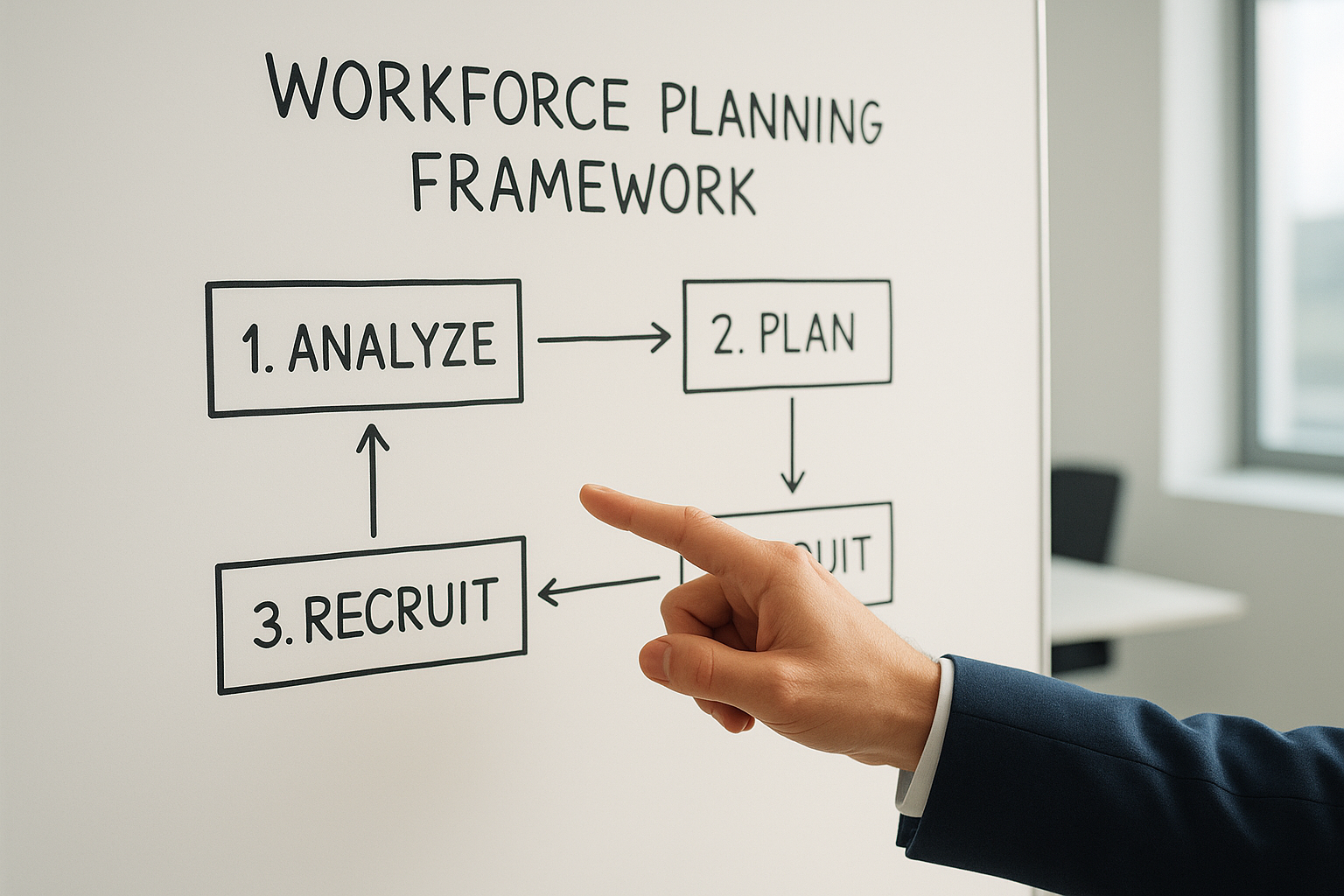
Mapping out each step keeps a strategic workforce planning process practical instead of theoretical.
Why SMBs Need a Workforce Planning Framework
Larger companies typically have dedicated HR leaders running this process year-round. Smaller businesses, however, often rely on a founder, office manager, or ops leader wearing five hats at once. A clear workforce planning framework gives that person a repeatable structure to follow instead of reinventing the process every hiring cycle.
This matters even more for businesses between 10 and 250 employees, where one bad hire or one unexpected departure can disrupt an entire team. Soteria HR’s resource on workforce planning for small business outlines how to right-size this framework for leaner teams without adding unnecessary bureaucracy.
Common Mistakes to Avoid in Workforce Planning Strategy
Even well-intentioned plans can fall short. In particular, these missteps tend to undercut results:
- Planning only for growth while ignoring attrition and burnout risk.
- Skipping a compliance review during the planning stage.
- Treating the plan as a one-time document instead of a living process.
- Failing to involve department leaders who know where the real gaps are.
Avoiding these mistakes is often the difference between a plan that sits in a drawer and one that actually delivers the benefits of strategic workforce planning day to day.

Regularly reviewing staffing reports keeps compliance risks from piling up unnoticed.
Frequently Asked Questions About Benefits of Strategic Workforce Planning
What are the main benefits of strategic workforce planning?
The main benefits of strategic workforce planning include lower turnover costs, faster and more accurate hiring, stronger compliance, and a workforce that scales smoothly with business growth. It replaces reactive staffing decisions with a proactive, data-informed approach.
What is strategic workforce planning?
Strategic workforce planning is the process of analyzing current staffing, forecasting future talent needs, and closing the gap between the two. It aligns hiring, training, and succession decisions with overall business goals.
How is workforce planning different from regular hiring?
Regular hiring reacts to an open role after it exists, while workforce planning anticipates staffing needs months or years in advance. This forward-looking approach reduces last-minute scrambling and costly hiring mistakes.
Why do small and mid-sized businesses need workforce planning?
Small and mid-sized businesses often lack dedicated HR leadership, which makes staffing gaps and compliance risks harder to spot early. A structured workforce plan gives growing companies the same foresight larger organizations already use.
How much does poor workforce planning cost a business?
According to SHRM, replacing a single employee can cost between 50% and 200% of that employee’s annual salary. Poor planning multiplies these costs through repeated turnover, rushed hiring, and lost productivity.
How long does it take to build a workforce plan?
Most SMBs can build an initial workforce planning framework in four to six weeks when working with an experienced HR partner. Ongoing refinement continues quarterly as business needs shift.
What is the first step in the workforce planning process?
The first step is assessing your current workforce, including headcount, skills, and turnover trends. This baseline reveals where existing gaps already exist before forecasting future needs.
What common mistakes do companies make with workforce planning?
Common mistakes include planning only for growth and ignoring attrition, skipping compliance review, and failing to revisit the plan after it’s written. These gaps quietly erode the benefits of strategic workforce planning over time.
Can outsourced HR handle workforce planning for a small business?
Yes, outsourced HR partners like Soteria HR routinely build and manage workforce plans for growing companies without an internal HR department. This gives smaller businesses access to strategic expertise without the cost of a full-time HR executive.
How does workforce planning improve compliance?
Workforce planning forces a regular review of staffing levels against labor law requirements, classification rules, and benefits thresholds. Catching these issues during planning is far cheaper than fixing them after a violation occurs.
Does workforce planning help with employee retention?
Yes, workforce planning identifies burnout risks, skill gaps, and succession needs before they drive employees to quit. Addressing these issues early supports a healthier, more stable team.
How often should a workforce plan be updated?
Most growing businesses should revisit their workforce plan quarterly, with a deeper annual review tied to budgeting cycles. Rapidly growing or seasonal businesses may benefit from monthly check-ins.
In summary, the benefits of strategic workforce planning reach far beyond a tidy spreadsheet. They show up in lower turnover, cleaner compliance, and a team that’s ready for growth instead of scrambling through it. Businesses that build this discipline early—often with support from a partner like Soteria HR—tend to make calmer, more confident staffing decisions for years to come. If your team is still reacting to staffing surprises instead of planning for them, now is a good time to start building that framework.