Retention strategies for high performers are the single most valuable investment a growing company can make, because losing a top employee costs far more in money and momentum than losing an average one. However, many small and mid-sized organizations still treat retention as a one-size-fits-all program instead of designing a deliberate plan for the people who drive the most results. This article breaks down what actually keeps top talent engaged, why standard retention tactics often fall short for this group, and how to build a practical plan your managers can use starting this quarter.
Direct answer: Retention strategies for high performers work best when they combine competitive pay, visible career growth, timely recognition, and honest, recurring conversations about what the employee needs to stay. Generic perks rarely move the needle for this group; targeted attention to growth and impact does.
What Are Retention Strategies for High Performers?
Retention strategies for high performers are a defined set of practices, policies, and conversations aimed specifically at keeping an organization’s strongest contributors engaged and committed. In particular, these strategies differ from general employee retention plans because top performers usually have more outside opportunities and are evaluated against the market more often than average employees.
As a result, a company that applies the same retention playbook to every employee often loses its best people first, since standard perks rarely address what actually motivates high achievers. Specifically, top performers tend to prioritize growth, autonomy, and recognition over blanket benefits that apply equally to everyone.

Regular, honest conversations are at the core of effective retention strategies for high performers.
Why Keeping Top Talent Matters More Than Ever
Turnover among top performers is expensive, and the cost goes well beyond recruiting fees. According to research from the Society for Human Resource Management, replacing a salaried employee can cost six to nine months of that employee’s salary once lost productivity, training, and ramp-up time are factored in. For a high performer, that figure is often higher because their departure also disrupts team output and client relationships.
In addition, engagement itself has a measurable business impact. Gallup’s workplace research has found that highly engaged teams show roughly 23% higher profitability than disengaged ones, which underscores why keeping your best people invested in their work pays off beyond headcount stability. Meanwhile, data from the U.S. Bureau of Labor Statistics continues to show that employees have meaningful alternatives in a competitive labor market, so companies cannot assume top talent will simply stay out of loyalty.
Therefore, building a deliberate plan for retaining high performers is not an optional extra. It is a direct protection against lost revenue, slowed projects, and damaged team morale.
Signs a Top Performer May Be Ready to Leave
Before building retention strategies for high performers, it helps to recognize the early warning signs. Consequently, managers who know what to watch for can intervene before a resignation letter appears.
- Reduced voluntary input in meetings or planning sessions
- Declining interest in stretch projects they once pursued eagerly
- More questions about career timelines, promotions, or compensation structure
- Increased time off or quieter communication patterns
- Visible frustration when recognition goes to less impactful work
Above all, none of these signs alone guarantee someone is leaving. However, when several appear together, they usually signal it is time for a direct conversation rather than a wait-and-see approach.
7 Retention Strategies for High Performers That Work
These retention strategies for high performers are drawn from practical HR consulting work with growing organizations. Specifically, they focus on the drivers that matter most to top talent: growth, recognition, fairness, and voice.
- Benchmark pay against current market data. Review compensation at least annually against regional and industry data so a below-market offer never becomes the reason a top performer starts a job search.
- Build individualized career maps. Sit down with each high performer and document realistic next roles, skills to build, and a rough timeline over the next twelve to eighteen months.
- Recognize specific contributions promptly. Tie recognition to measurable impact, and deliver it close to the achievement rather than saving it for an annual review.
- Offer stretch assignments, not just more work. Give high performers visible, high-impact projects that build new skills, instead of simply increasing their existing workload.
- Run structured stay interviews. Ask directly what keeps the employee engaged and what might eventually push them to leave, and act on what you hear.
- Protect against burnout. Monitor workload closely, since high performers often absorb extra responsibilities quietly until they reach a breaking point.
- Give managers the tools to have these conversations. Train frontline managers on career coaching and recognition, since most retention moments happen in day-to-day management, not annual HR programs.

Timely, specific recognition reinforces every other retention effort.
Common Mistakes When Retaining Top Employees
Even well-intentioned leaders make predictable mistakes when trying to keep their best people. For example, many promote a strong performer into management without preparing them for the new responsibilities, which can backfire if the employee never wanted to manage others in the first place.
Similarly, some companies assume a raise alone will fix disengagement, when the employee’s real concern is a lack of growth or recognition. In contrast, others wait until an exit interview to ask what might have kept the employee, which is far too late to act on the feedback.
Consequently, the most effective approach treats compensation, growth, and recognition as connected pieces rather than separate fixes applied one at a time. For a deeper look at these patterns, Soteria HR’s guide on proven employee retention strategies walks through additional examples relevant to growing teams.
How Outsourced HR Support Strengthens High-Performer Retention
Many growing companies lack a dedicated internal team to design compensation structures, career frameworks, and manager training all at once. This is where an outsourced HR partner can help close the gap without requiring a full internal HR department.
Soteria HR, based in Pasadena and serving employers across Los Angeles, Orange County, and nationwide, provides hands-on HR administration, consulting, and benefits administration that growing organizations can lean on as they build out retention programs. In particular, Soteria’s Administrative Services Organization (ASO) option delivers tailored HR support without co-employment, so clients remain the employer of record and retain responsibility for their own employment decisions. Furthermore, Soteria supports companies that have no internal HR function as well as those with an existing HR team that needs extra capacity.
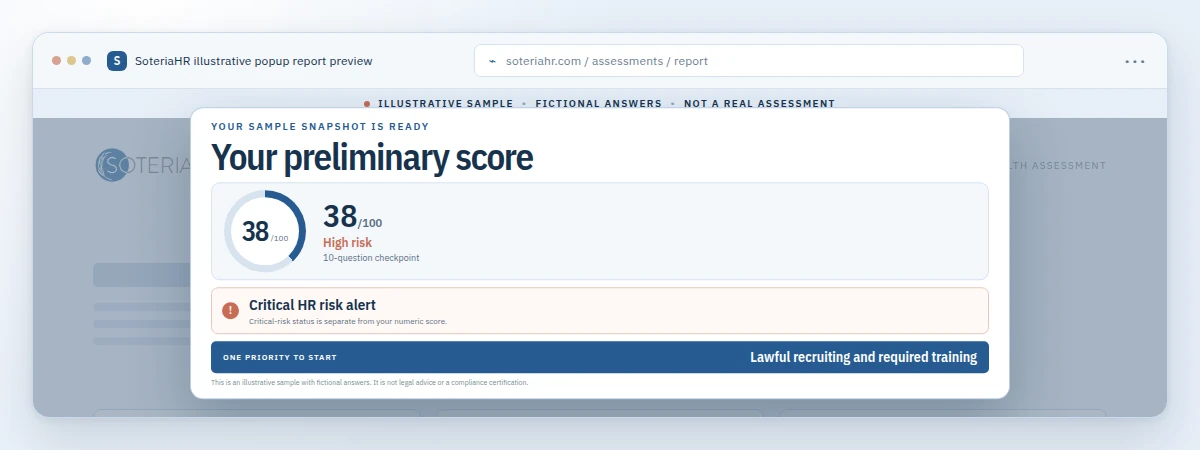
For readers who want a starting point, Soteria HR’s free HR Health Assessment offers a quick way to surface potential gaps, including a 10-question Quick HR Check that takes about two minutes and a 40-question Complete HR Health Assessment that takes roughly 10 to 12 minutes. The results are self-reported and preliminary, not a certification of compliance, but they can highlight priorities worth discussing with an HR professional. You can also review related guidance on employee retention best practices and practical steps for improving employee retention across your workforce.

Outsourced HR support can help growing companies build structured, sustainable retention programs.
Building a Long-Term Retention Plan
Retention strategies for high performers work best as an ongoing cycle rather than a one-time project. Therefore, once the initial plan is in place, leaders should revisit pay benchmarks, career maps, and manager training on a recurring schedule, adjusting as the business and the employee’s goals evolve.
Additionally, pairing individual career conversations with broader employee development strategies helps ensure growth opportunities exist across the organization, not just for a handful of standout employees. This consistency matters, since high performers tend to notice quickly when retention efforts feel reactive rather than genuine. For a broader library of tactics, Soteria HR’s collection of employee retention strategies covers additional approaches worth testing across different team sizes.
Frequently Asked Questions
What are retention strategies for high performers?
Retention strategies for high performers are deliberate practices, such as career pathing, targeted recognition, and competitive pay reviews, designed to keep an organization’s strongest employees engaged and committed. They go beyond general retention tactics because top talent typically has more external options and different motivators.
Why do high performers leave companies even when they are paid well?
High performers often leave because they feel underutilized, see no path for growth, or sense their contributions go unrecognized. Pay alone rarely compensates for stalled development or a lack of meaningful challenge.
How can small businesses retain top talent without a large budget?
Small businesses can retain top talent through flexible scheduling, visible recognition, stretch assignments, and honest career conversations, none of which require large budgets. Consistency and genuine attention often matter more than perks.
What is the difference between retention strategies for high performers and general employee retention plans?
General retention plans focus on baseline satisfaction across the workforce, while retention strategies for high performers target the specific drivers, such as advancement speed and recognition, that influence top talent decisions. High performers are usually evaluated against market opportunities more actively than average employees.
How much does it cost to replace a high-performing employee?
The Society for Human Resource Management has estimated that replacing a salaried employee can cost six to nine months of that employee’s salary, and the figure tends to be higher for top performers due to lost productivity and institutional knowledge. Recruiting, onboarding, and ramp-up time all add to the total cost.
How long does it take to see results from a retention strategy?
Most organizations notice measurable shifts in engagement and stated intent to stay within three to six months of consistent implementation. Full retention outcomes, such as lower voluntary turnover, usually become clear over twelve to eighteen months.
What are common mistakes companies make when trying to retain top performers?
Common mistakes include treating recognition as a one-time event, promoting without preparing employees for new responsibilities, and assuming a raise alone will resolve disengagement. Many companies also wait until an employee resigns before addressing concerns.
What role does compensation play in retention strategies for high performers?
Compensation is a foundational factor, but it functions as a baseline rather than a complete solution; pay that falls noticeably below market rate will drive high performers out regardless of other efforts. Once pay is competitive, growth and recognition typically become the stronger retention levers.
How often should managers check in with high-performing employees?
Managers should hold dedicated career and workload conversations with high performers at least quarterly, separate from routine status updates. Frequent, substantive check-ins help surface frustrations before they turn into resignation letters.
Can outsourced HR support help with retention strategies for high performers?
Yes, outsourced HR partners can help design compensation benchmarks, career frameworks, and recognition programs that growing companies may not have the internal resources to build alone. They can also coach managers on stay interviews and succession planning.
What is a stay interview and does it really help retention?
A stay interview is a structured conversation that asks a current employee what keeps them engaged and what might make them leave, conducted before any sign of resignation. Many organizations find stay interviews surface actionable concerns earlier than annual engagement surveys.
What are best practices for recognizing high-performing employees?
Best practices include recognizing specific contributions promptly, tying recognition to business impact, and mixing public acknowledgment with private development conversations. Generic or delayed praise tends to lose its retention value.
Do career development plans actually reduce turnover among top talent?
Career development plans can meaningfully reduce turnover because they address the primary reason many high performers disengage: a lack of visible forward motion. A documented plan with milestones gives employees a concrete reason to invest in staying.
In conclusion, effective retention strategies for high performers combine fair, market-aligned pay with real career growth, timely recognition, and honest conversations that happen long before resignation letters appear. Above all, consistency matters more than any single perk or program. If you are ready to put these strategies into practice, visit Soteria HR to talk to an HR expert, call (800) 399-2458, or start with the free HR Health Assessment to identify your organization’s biggest retention gaps.