Strategic organizational development is the deliberate, long-term process of aligning a company’s people, structure, and culture with its business goals so growth doesn’t outpace capability. For growing small and mid-sized businesses, this discipline is often the difference between scaling smoothly and scrambling to fix avoidable people problems. In fact, many founders and operations leaders only discover the need for structured organizational development after turnover spikes, compliance risks pile up, or teams start pulling in different directions. This guide breaks down what strategic organizational development really means, why it matters, and how to build a plan that fits your stage of growth.
Quick Answer
Strategic organizational development combines HR strategy, leadership alignment, and culture design to help a company scale without breaking. It typically includes workforce planning, leadership development, and structured change management guided by a long-term roadmap tied directly to business results.
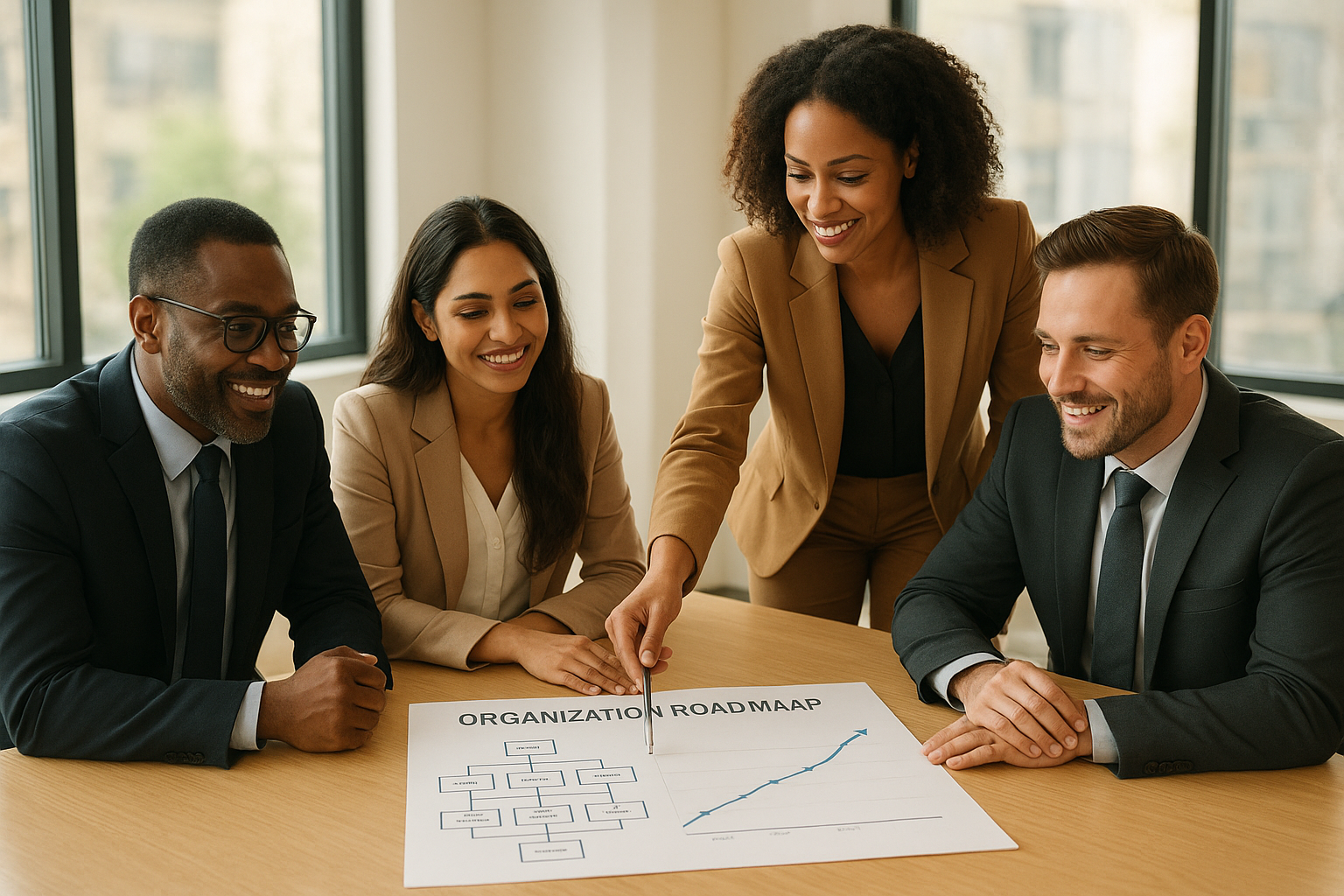
Leaders reviewing a strategic organizational development plan before their next stage of growth.
What Is Organizational Design?
Strategic organizational development is the structured practice of designing an organization’s leadership, systems, and culture to support current performance and future growth. Unlike reactive HR fixes, it takes a proactive, whole-business view of how people, processes, and strategy connect. In short, it treats your organization as a system that needs intentional design, not just occasional maintenance.
Traditionally, organizational development (OD) grew out of behavioral science and change management research in the mid-20th century, according to the Wikipedia overview of organization development. Today, however, it has evolved into a practical toolkit for business leaders who need to scale without losing focus. Specifically, strategic organizational development blends workforce planning, leadership development, and culture design into a single roadmap tied to business outcomes.
As a result, companies gain clarity on how each hire, promotion, and policy decision supports the bigger picture. For example, a 40-person company preparing to double headcount might use OD principles to redesign reporting structures, clarify decision rights, and build a leadership bench before the growth actually happens. Consequently, the business avoids the chaos that often accompanies rapid scaling. In contrast, companies without a deliberate OD strategy tend to add roles reactively and struggle with role confusion once they cross the 50-employee mark.
Why an Organizational Development Strategy Matters for Growing Teams
An organizational development strategy matters because growth exposes gaps that smaller teams can absorb but larger ones cannot. As headcount increases, informal communication breaks down, and undocumented processes become liabilities. Therefore, leaders need a framework that scales alongside the business rather than a patchwork of quick fixes.
Research from the Society for Human Resource Management (SHRM) indicates that organizations with formal development strategies report meaningfully lower voluntary turnover than those without one, largely because employees have clearer paths for growth. In particular, structured OD reduces the guesswork that often drives frustration among mid-level managers who inherit teams without adequate support.
Furthermore, a well-designed organizational development strategy protects against compliance risk. As policies scale from a handful of employees to fifty or more, wage and hour rules, leave requirements, and anti-discrimination obligations become more complex. Consequently, pairing OD work with compliance oversight – the kind Soteria HR provides through its organizational development consulting services – helps growing companies avoid the legal exposure that catches many founders off guard.
For a deeper look at how this plays out in practice, this practical guide to organization development strategy walks through real scenarios growing companies face. Above all, the goal is the same: build the organization deliberately, rather than letting structure happen by accident.
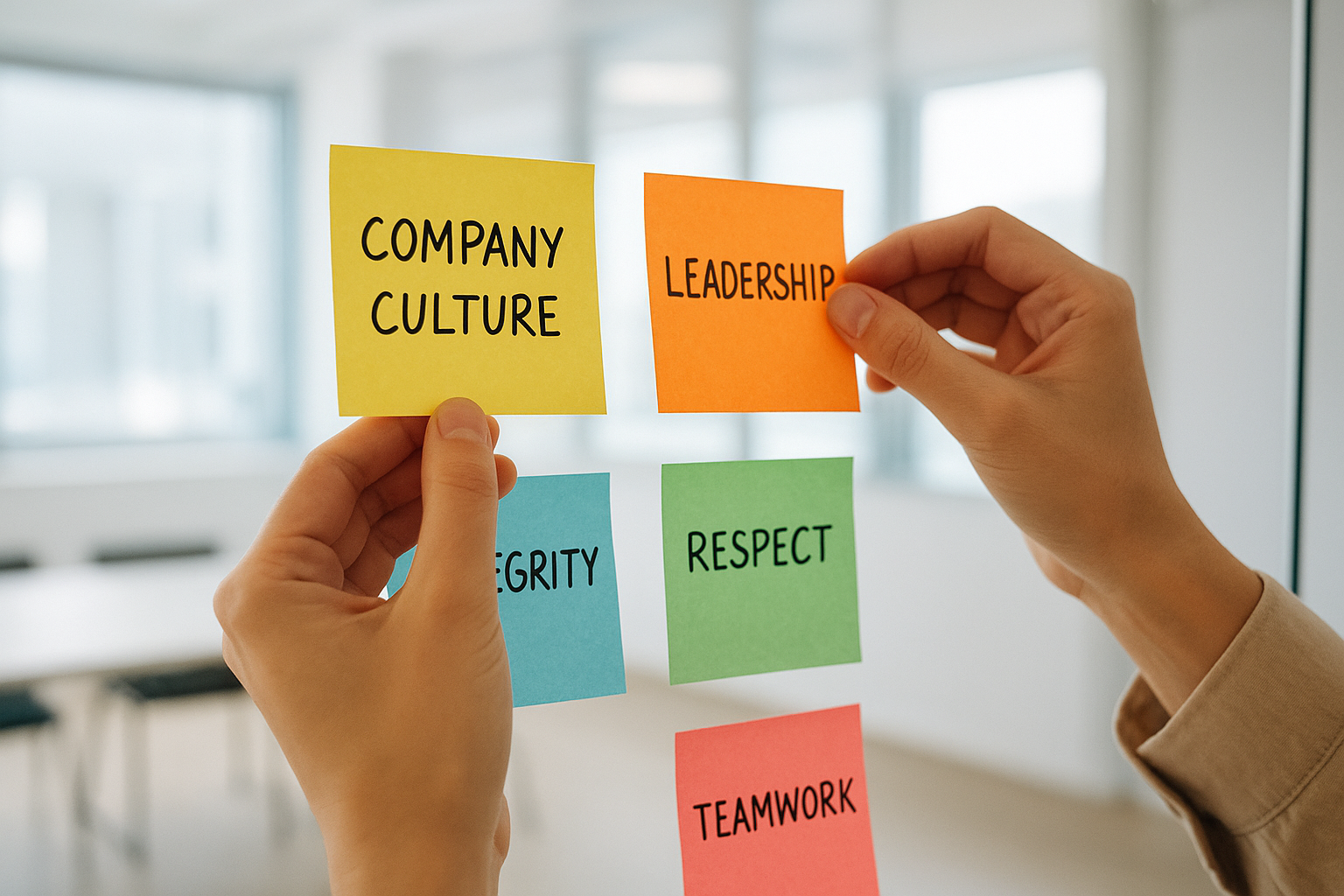
Mapping leadership roles and culture values is a core part of any organizational development framework.
Core Elements of an Organizational Development Framework
A strong organizational development framework typically rests on five interconnected elements: leadership alignment, workforce planning, culture design, performance systems, and change management. Each piece reinforces the others, so skipping one usually weakens the whole structure.
Specifically, leadership alignment ensures managers understand how their goals connect to company strategy. Meanwhile, workforce planning maps current staffing against future needs, identifying gaps before they become emergencies. Culture design, on the other hand, focuses on the norms and values that shape day-to-day behavior, because culture forms whether or not anyone plans it.
Performance systems translate strategy into individual accountability through clear goals and feedback loops. Similarly, change management gives the organization a repeatable process for handling transitions, whether that’s a reorg, a new system rollout, or rapid hiring.
For a more detailed breakdown of these pieces, this complete guide to organizational development strategy and this complete guide to organizational development frameworks both offer structured starting points. In practice, however, no framework works in isolation; it needs to be tailored to the company’s size, industry, and growth stage.
Building Your Organizational Development Plan: 6 Practical Steps
Building a strategic organizational development plan doesn’t require a massive consulting engagement. Instead, it requires a clear process. The following six steps outline how growing companies typically approach the work.
- Assess current state. Review your organizational chart, turnover data, and employee feedback to identify where structure, communication, or leadership gaps are already slowing the business down.
- Define future structure. Map out what the organization needs to look like at your next growth milestone, including new roles, reporting lines, and decision-making authority.
- Build leadership capability. Invest in training and coaching for managers who will need to lead larger or more complex teams as the company scales.
- Design culture intentionally. Document the values, norms, and behaviors you want to reinforce, then build them into hiring, onboarding, and performance reviews.
- Create a phased rollout plan. Sequence changes so the organization can absorb them without overwhelming managers or employees with too much at once.
- Monitor and adjust. Track key metrics like turnover, engagement, and time-to-fill, then revisit the plan quarterly to keep it aligned with business results.
For a longer list of tactics you can apply immediately, these organizational development strategies offer additional starting points beyond the six steps above.
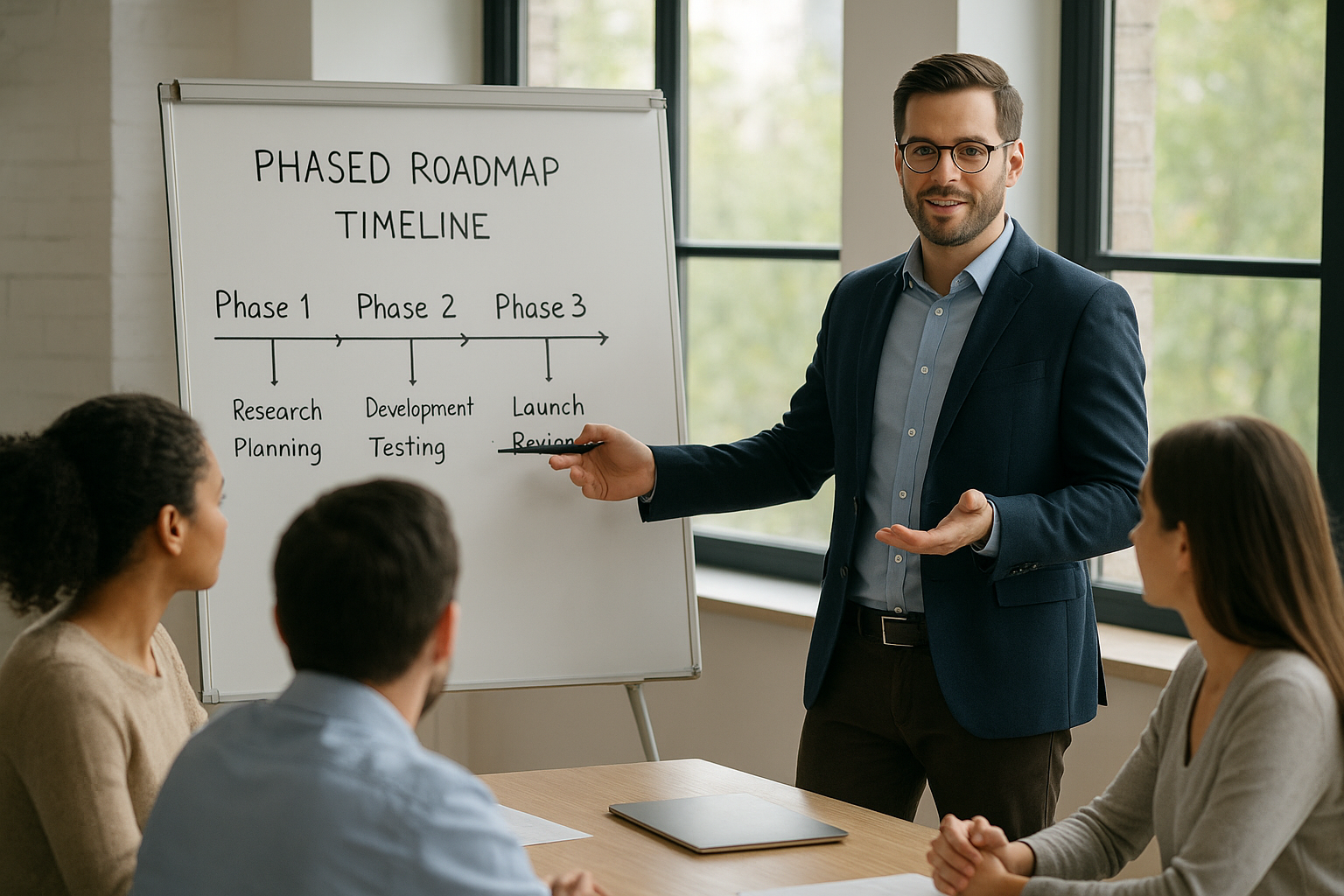
A phased rollout keeps an organizational development plan manageable for teams and managers alike.
Strategic OD vs. Traditional HR Administration
Strategic organizational development and traditional HR administration solve different problems, even though they often get lumped together. Traditional HR administration keeps the day-to-day machine running: payroll coordination, benefits enrollment, and policy enforcement. Strategic organizational development, by contrast, looks ahead, asking how the organization needs to evolve to support where the business is headed.
In practice, both functions need each other. Without solid HR administration, an organization development plan has no operational foundation to stand on. Without organizational development, HR administration becomes purely reactive, fixing problems after they’ve already cost time or talent.
This is precisely why many growing companies choose an outsourced HR partner rather than hiring a single internal generalist. A generalist role often gets pulled entirely into daily administration, leaving little room for the strategic work that prevents bigger problems down the road. Soteria HR structures its support to cover both sides, pairing full-service HR administration with proactive organizational development guidance. For more on how this works in practice, visit Soteria HR to see the full range of services available to growing teams.
Common Mistakes to Avoid in Organizational Development Planning
Even well-intentioned organizational development efforts can stall. The following mistakes show up repeatedly among growing companies.
First, many leaders wait too long to start, treating OD as a luxury rather than a growth requirement. Second, some companies copy a framework wholesale from a much larger organization without adapting it to their size or culture. Third, plans often stall because no one owns the follow-through once the initial planning meeting ends.
In addition, some companies focus exclusively on org charts while ignoring the culture and leadership pieces that actually determine whether a new structure works. Similarly, skipping communication during a reorg tends to create more anxiety and turnover than the change itself would have caused. Above all, avoiding these mistakes comes down to treating organizational development as an ongoing discipline, not a one-time project. According to industry data cited by SHRM, a majority of change initiatives that lack clear communication plans fail to meet their original goals, which underscores why the human side of OD matters as much as the structural side.
Frequently Asked Questions About Strategic Organizational Development
What is strategic organizational development?
Strategic organizational development is the deliberate process of aligning a company’s leadership, structure, and culture with its long-term business goals. It combines workforce planning, leadership development, and change management into one coordinated approach.
How long does an organizational development plan take to implement?
Most organizational development plans take three to twelve months to roll out, depending on company size and the scope of change. Ongoing refinement typically continues for years as the business keeps growing.
Why do growing companies need an organizational development strategy?
Growing companies need an organizational development strategy because informal structures that work at 15 employees usually break down at 50 or more. A clear strategy prevents role confusion, turnover, and compliance risk before they cost time or talent.
What is the difference between organizational development and HR management?
HR management focuses on daily administration such as payroll, benefits, and compliance, while organizational development focuses on long-term structure, leadership, and culture. The two functions work best when they operate together rather than separately.
How much does organizational development consulting cost?
Costs vary widely based on company size and scope, ranging from a focused assessment to an ongoing monthly retainer for outsourced HR support. Many small and mid-sized companies find outsourced OD support more affordable than building a full internal HR leadership team.
What are the main components of an organizational development framework?
A solid organizational development framework typically includes leadership alignment, workforce planning, culture design, performance systems, and change management. Each component supports the others, so skipping one usually weakens the overall structure.
Who is responsible for organizational development in a small company?
In small companies, organizational development responsibility usually falls to the founder, COO, or an office manager wearing multiple hats. Many of these leaders bring in an outsourced HR partner to provide the strategic support they lack internally.
What are common mistakes companies make with organizational development?
Common mistakes include waiting too long to start, copying a framework from a much larger company, and failing to assign clear ownership for follow-through. Ignoring culture and communication during structural change is another frequent misstep.
How is organizational development different from change management?
Change management focuses on guiding people through a specific transition, while organizational development is the broader, ongoing discipline of designing the organization itself. Change management is often one tool used within a larger organizational development strategy.
What are best practices for building an organizational development strategy?
Best practices include assessing your current state honestly, involving managers early, sequencing changes in phases, and reviewing progress quarterly. Tailoring the plan to your company’s size and culture matters more than following a generic template.
Can a small business benefit from strategic organizational development?
Yes, small businesses often benefit the most because early structure prevents costly fixes later. Building leadership capability and clear processes while the team is still small makes future growth far less disruptive.
Bringing Strategic Organizational Development to Life
Strategic organizational development isn’t a one-time project you finish and file away. Rather, it’s an ongoing discipline that keeps leadership, structure, and culture aligned with wherever the business is headed next. Companies that treat it this way tend to hire more intentionally, retain talent longer, and avoid the compliance headaches that catch reactive organizations off guard.
For growth-minded companies without a dedicated HR leader on staff, an outsourced partner can provide the strategic thinking and hands-on support needed to build this discipline without adding full-time headcount. Soteria HR works alongside founders, COOs, and operations leaders to design custom HR playbooks, employee handbooks, and organizational development plans that fit each company’s stage of growth. Learn more at soteriahr.com.
In summary, strategic organizational development gives growing companies a repeatable way to build leadership, structure, and culture on purpose rather than by accident. Whether you’re preparing to double your headcount or simply want fewer surprises as you scale, a deliberate approach to strategic organizational development protects both your people and your bottom line.